中文
春德的盛宴
原作Monique Sicard
林志明中譯
美味的距離。奇異的陌生人:謝春德的作品使我們訝異、驚奇、著迷。這些作品玩弄著我們西方的成規、我們的思想 – 如此獨特又多樣 –,它們向我們挑釁。
首先是尺寸。接著是肌理。這些非常巨大的畫面,以略帶深藍的黑色,在同一影像中混合著明晰和模糊,唯一的意圖便是它們之間的對抗。於是產生了一種影像和寫實主義間的漂動。這是令人舒適的不平衡。
接著是影像,如果使用一個有點圖式化的語言來說,這是指其中的「符旨」。虛構這裝置把夜之夢想搬演出來,而作者先是仔細畫出草圖,再由演員協助完成(圖 4-1)。這是一個私密蠕動的世界的影響力和性慾熱狂的混合。而既然夢說不來,每個人可看到他所找的,或是他在這些寓意景象中所拒絕的,這其中是如此地混合著幸福的狂暴和對未來幸福地擔憂。謝春德給人看的是無法抵擋的力量,既是私密的又是政治的。對抗這些力量我們無能為力,或者,其唯一的方法就是用攝影的方式將它們搬演出來。人之夢的現實,潛意識的指標性。
也許最美的,最微妙的,便是變動世界所產生的這些裂痕。這些影像和我們訴說著世代間的衝突,城鄉間的磨擦,現代性與傳統。它們高喊出一個對抗,介於悲劇性的,仍待建構的複雜過去和新世界,後者有其高樓、青年和希望。
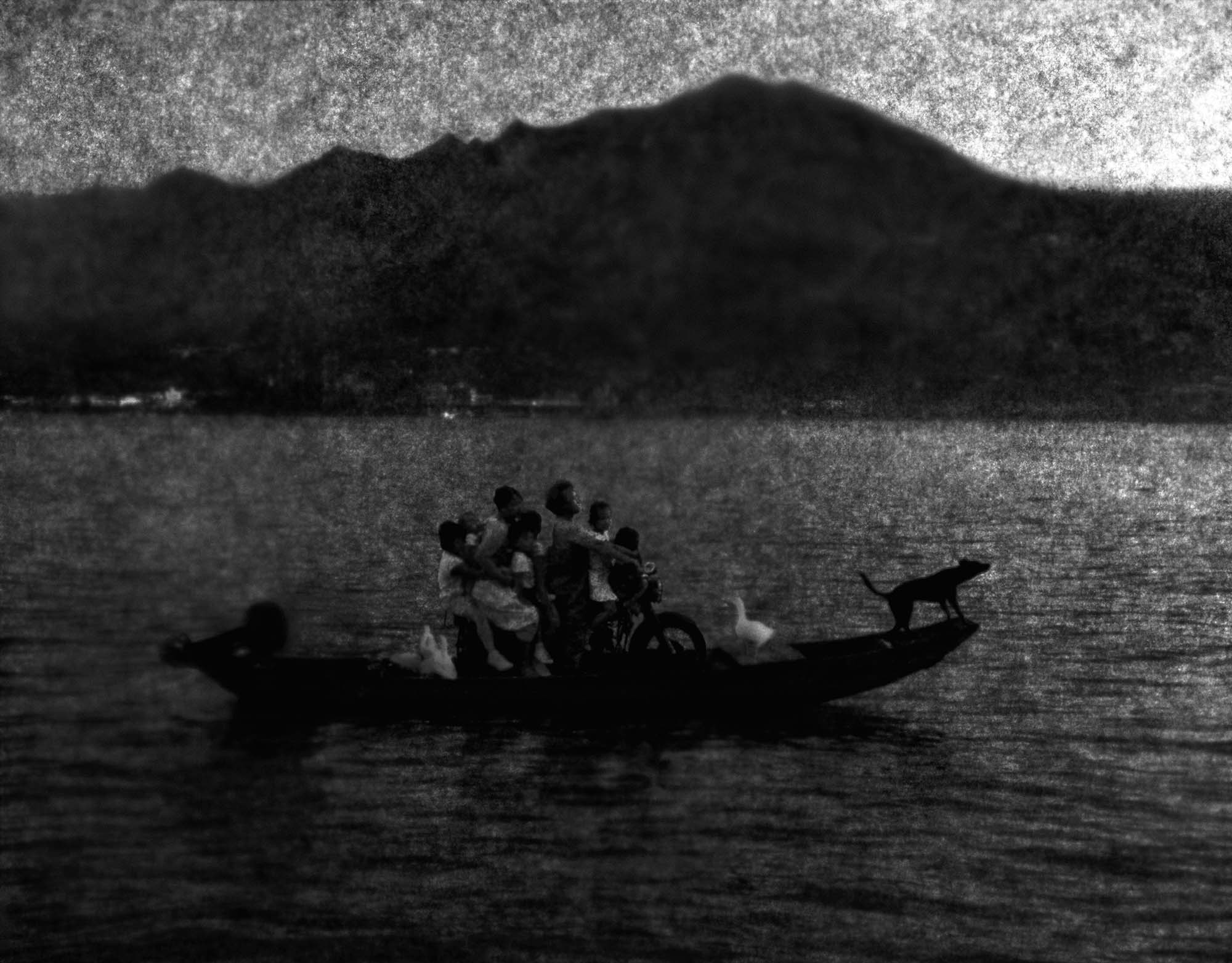
由八位成員組成的家庭以引擎船筏在河上過渡,背景是美妙的觀音山(Figure4-2)。帶上船的還有他們的摩托車及動物。他們是幸福的。但在船頭,狗質疑著等待著他們的不確定未來。他們離開鄉下及古老的世界,朝向城市,希望能住進台北令人暈眩的高樓之中。再遠一點,擠在遮蔽山丘的高樓間,兩個釣者著守候著浮標不真實的浮動(Figure4-3)。他們和我們訴說整合進現代世界的希望必然有部份失敗。在他們自己的國家裡,他們將永遠是奇異的陌生人。也許他們還夢想著以前用圓瓦覆蓋的祖宅,在其中,熟讀詩書的長者會傳授給年幼者他對書籍的熱情,而小孩們則會攀爬石頭水牛取樂歡笑( Figure4-4)。攝影把這些快樂的日子永遠地印刻在記憶之中。但這也是攝影作為「光之描繪」的威力,因為在見證幸福的同時,它也促使它們誕生。黑白用強有力的方式肯定了這種虛構的真實性。
台灣的過去是介於古老日本帝國留下的印記和碩大無朋的近鄰中國大陸之間,雖然這過去重壓著她,但她也一步一步地找到了自己的歷史。由她的一位拍夢之攝影的藝術家來高聲喊出這個差異,會有什麼人更適合呢?對於這差異,我們不會很不謹慎地將之命名為「身份認同」。不需要用到華語:這些影像自己會說話。在將一部機車登上船隻的微弱科技下,閃現是一個流傳千年的農民文化,以建構的方式觀照世界。台灣的政治地位在這麼長的時間裡都未確定,卻伴隨著一個表現耀眼的現代經濟,有可能把這島嶼的命運排擠進入一個模糊灰黯的商業身影。但這裡有對它的抵抗。它來自一個哲學,其中身體即是精神,而重要的是運用其自身自由的長時間練習。
迷失於海邊兩道布幕間的藝術家在質疑著(Figure4-5)。要作什麼呢?要搬演什麼?音樂、孩童、動物、女人、人體?在一個運轉得太快的世界裡,那時他們被一種想望緩慢的慾望標記著。
春德的盛宴由這些夢的表演及光之描繪走向飲食的作品化。因為藝術在此是可以吃的。或者說,所有的生命段落都具有演變為藝術的豐富潛能。準備一道這樣的午餐要花費無限長的時間,就好像實現這展覽的時間 – 二十年 –,這一點使我們感動。讚頌無汙染的水,真實、用心、撿選、美麗的食物。
利用最新的科技,一位藝術家追尋著過去和其起源的痕跡。台灣是島這事實不能隨意忽略。在封閉的、被水包圍的地方,創造力最能表達其原創性。較少被大眾干擾,不受群眾運動的影響,它在其中找到了它所需要的避風港。讓我們別忘了,夢的地域也是最脆弱的地域。
English
The Feast of Chun-te
Monique Sicard
Pleasant interval. Foreigner works. The photographs of Hsieh Chun-te surprise us, shock us, delight us. By playing on our Western conventions, our thoughts – single and multiple – they provoke us.
The format, first. Then the texture. These very large, black, deep blue paintings mix the sharpness and blur into a single image with no other intention than their aesthetic confrontation. From that, waverings between image and reality are born. Pleasantly unsettling.
Next, the scenes. A “signified” if a bit schematic language is in play. The devices of fiction depict the dreams of the night that the author has carefully drawn before calling the actors to the rescue. (Figure 4-1) Ascendancy over a world that moves, closely entwined with sexual fevers. And since dreams are unspeakable, everybody can see what he wants or what he rejects in these allegorical scenes mingling the violence of happiness with happy anxiety about the future. Hsieh Chun-te reveals these compelling forces, intimate and political – against which we can do nothing, except perhaps to present them photographically. Reality of human dreams, indexicality of the unconscious.
The best, perhaps, the subtlest, are these cracks of a changing world. The images tell of an intergenerational conflict, friction between city and countryside, modernity and tradition. They scream the confrontation between a complex past, so tragic that its shadow still grows, and the new world with its skyscrapers, its youth, its hope.
A family of eight people goes down the river in a long motorboat against the magnificent backdrop of Mt. Guanyin.(Figure4-2) They have taken their motorbike, their animals. They are happy. But at the front, the dog is concerned about the uncertain future that awaits them. They leave the countryside and the old world and they make their way toward the city, hoping to live in one of the dizzying skyscrapers of Taipei. A little further, on the terrace of pretentious buildings hiding mountains, two fishermen watch the movements of unreal fishes. ( Figure4-3) They say that the hope of joining the modern world is partly doomed. They will always be strangers in their own country. Maybe they still dream of the family house with the roof of rounded tiles where elders passed on a passion for books to the youth, where children climbed, laughed, on false stone buffalos( Figure4-4). Happy days that the photograph inscribed forever in memories. But also the power of this “photo-graphy” in witnessing the very happiness to which it gives birth. The black and white claims the truth of this fiction forcefully.
Crushed by the past, still marked by the former Empire of Japan, dwarfed by its huge mainland Chinese neighbor, Taiwan rebuilds its history gradually. Who better than one of its artists to can claim in photographic dreams the disparity that we cannot without difficulty call “identity”? No need to use the Chinese language: the images speak for themselves. The paltry technology of an old motorcycle shrieks praise for a thousand-year-old culture filled with attention paid slowly to landscapes, as a constructive contemplation. The political status of the economy would reject the island in an uncertain profile and in the grayness of a commercial destiny. But there is a resistance to that. It comes from a philosophy where the body is spirit, where the long time devoted to exercising one’s own freedom is something important.
Between two curtains near the sea, the lost artists are wondering.(Figure4-5) What to do? What do they need to stage? The music, the children, the animals, the women, the human body? All the while, they are marked by these slow desires in a world that goes too fast.
The feast of Chun-te combines these dreamed and “photo-graphed” performances in the implementation of a meal. Because art is eaten here. Or rather, any fragment of life is rich, potentially, with an artistic future. We are moved by the inestimably long time required to prepare such an exhibition – twenty years, perhaps more – in praise of unpolluted water and carefully chosen, beautiful, true food.
While embracing the latest technologies, an artist sets out to find traces of the past and his own origins. It is not insignificant that Taiwan is an island. The creative forces express their originality in such enclosed places, surrounded by water. Less affected by the masses, protected from the movements of crowds, they are the havens they need. Do not forget, however, that these beautiful places are also the most fragile.
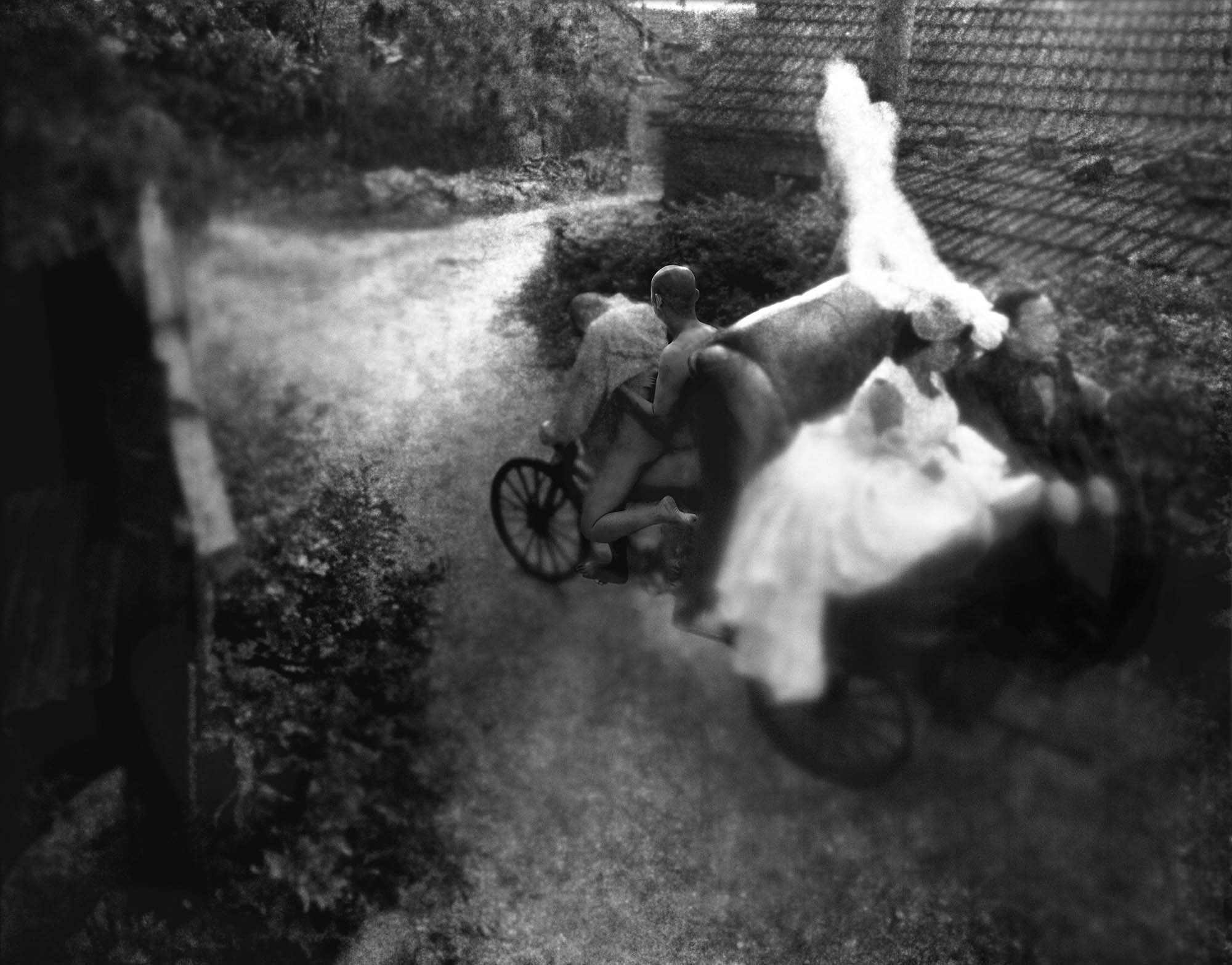
圖4-1 謝春德,〈RAW – 侏儒的婚禮〉,1987-2011。
Figure 4-1. Hsieh Chun-te, RAW – Marriage des nains, 1987-2011.
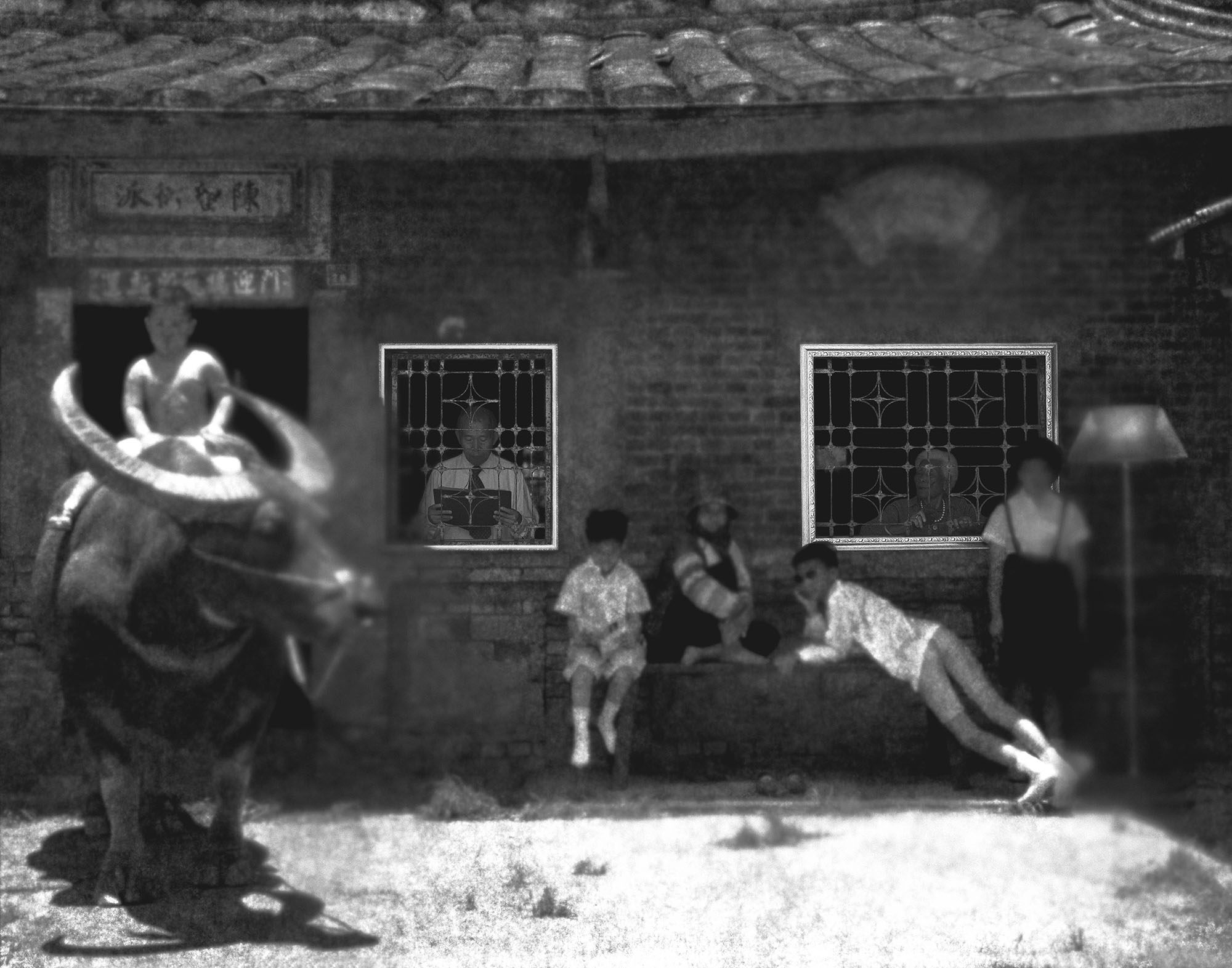
圖4-4 謝春德,〈RAW – 全家福〉,1987-2011。
Figure4-4. Hsieh Chun-te, RAW – Portrait de famille, 1987-2011.
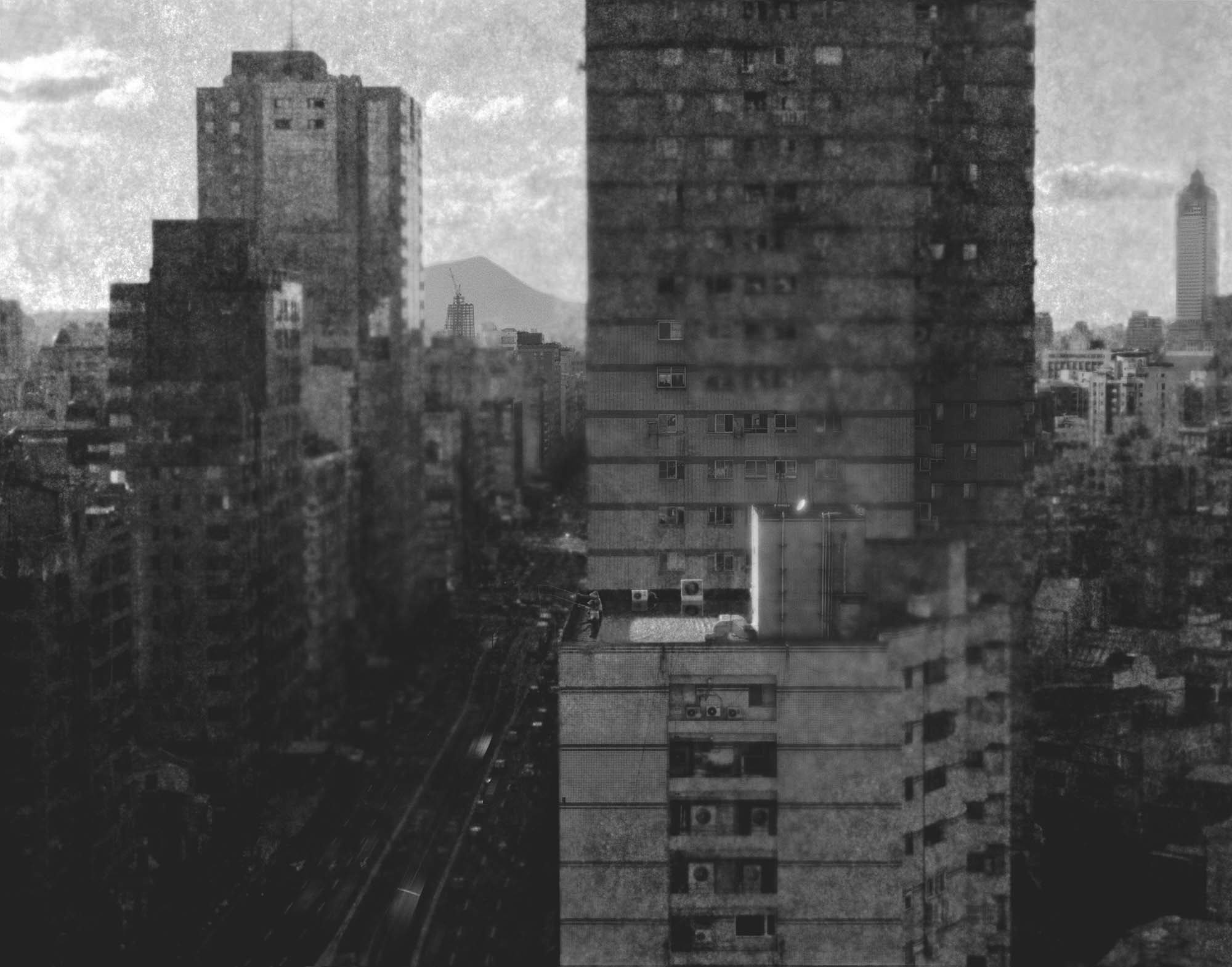
圖4-3 謝春德,〈RAW – 屋頂上的垂釣人〉,1987-2011。
Figure 4-3. Hsieh Chun-te, RAW - The pêcheurs sous le toit, 1987-2011.
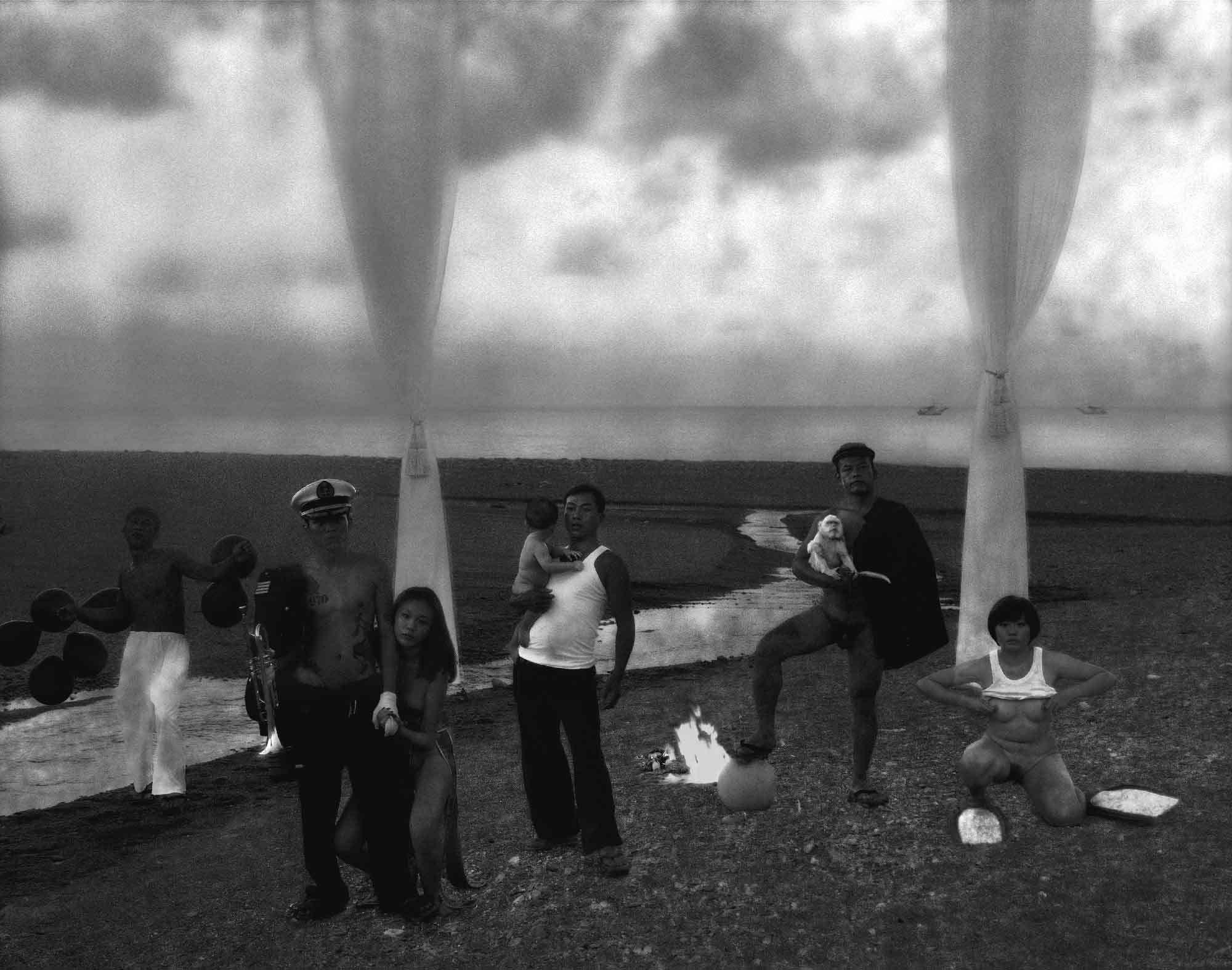
圖4-5 謝春德,〈RAW – 流浪藝人〉,1987-2011。
Figure4-5. Hsieh Chun-te, RAW – Artistes vagabonds, 1987-2011.