中文
謝春德的「濃縮」電影
多明尼克‧ 巴依尼(Dominique Païni) —
評論家、法國巴黎羅浮學院 教授 — 林志明 譯
法文中有個說法:「理念後續有力」(avoir de la suite dans les idées),意指對自我忠誠,根植於最初的立場選擇,而後續的生 命使其豐厚、展開並使得深藏和私密的動機得以其它方式展開及佈置。
由1960 年代開始,謝春德即以規律的自信和持恆來建構其宇宙。他的視覺動機有一部份起源於這個年代。這並不是意指一直到 《天火》系列的後續作品乃是在平靜中誕生…將謝春德和其他當代造形藝術家相區隔的,並不是平靜。相反地,亨利‧ 馬諦斯 所說的「奢華和享樂」( le luxe et la volupté)經常在這位台灣藝術家的作品中出現。
對他作品比較膚淺的取徑可能會認為他隸屬於一個國際性的潮流,其中混合了像吉伯與喬治(Guilbert and George)、威金 (Joël-Peter Witkin)、彼埃與吉爾(Pierre et Gilles)和大衛‧ 德‧ 拉夏貝爾(David de la Chapelle)…換句話說,這是個利 用攝影媒材固定化其裝置的潮流,它將被崇高化或惡意對待的身體置放於人工照明的風景之中,而這光線使得自然的真實和攝影 棚中的人造界線不清。但這樣作,實際上是誤認了謝春德的宇宙和造形計畫。由藝術家主導的回顧展,其中一大重點是使人能重 新發現他60 年代的作品,並使人更能感知他的特殊性。
由一開始,黑與白便構成了謝春德具例外性的調色盤。由理想的角度來說,使人印象深刻的不只是灰階無盡的細部變化,因為 二十世紀大部份的攝影大師都分享此一使命。使謝春德著迷的事物還在它處。它特別體現於一個衝突,此乃界於點和光的散射之 間、極清晰和模糊之間、輪廓清楚和照片沖洗後的顆粒質感之間。他另外也著迷於物質間的衝突:沼澤與肌膚、石頭的堆積和細 髮形成小河、身體毀去外形的脆弱和機器雕塑般的力量…
我們今天發現的這些影像,絕大多數完成於60 年代晚期,它們可以被視為在相遇的緊急狀況中被把握住的生命爆發,並受加速 所造成的意外所陪伴。事實上,這些影像轉譯出他同時想要經營「象徵主義」和抽象的雄心。
我堅持使用「象徵主義」這個字眼而不是「象徵」。法文區分者,一是十九世紀末期的一股繪畫和詩的潮流,另一個則是給予 形式組織第二層意義的雄心。在謝春德的作品中,存有一種無可置疑的象徵主義,而這在晚近的作品中特別是如此。由朵黑 (Gustave Doré)到瓊斯(Burne Jones),由顧彬(Alfred Kubin)到布萊克(William Blake),我們可以辨識出的影響存在於身 體的裝置,也存於它們和自然的抗衡之中,後者所參與的抒情詩,其最後的爭執焦點乃是大地力量和天空力量間的衝突。然而, 這些開啟謝春德創作的影像特別顯現出一種抽象的磨難。〈窗〉(1968,圖1)這件作品以過大特寫方式所拍攝的身體,佔據了 大部份的空間。在謝春德的作品中,總是有種令人不安的情色性。在這裡,框景的方式暗示著女性人物的連身裙被掀起但處於外 場… 特寫使得身體的外形「降格」,而且在仔細觀之後,人物到底是個人或只是個玩偶,一個活的存有或是個無生氣的模特兒, 其不確定性是絕對的。甚且,照片是採逆光攝影,一道活躍的光線穿越窗戶,燃燒著被呈現身體的輪廓線。這個神秘的側影因 而看來像是吸血鬼一般,在光線下耗蝕,並且熔為灼熱明亮的灰塵。這一點使我有權談論謝春德作品中的抽象磨難:形體的消 失以及光所帶來的某種恐怖,而這在《天火》這個系列的末世展現中還會再出現。
〈床〉(1969,圖2)利用也濫用了光線。很有可能是採用了和前作同一個窗戶,以便使光之火可以通過。不過這次,前作中 出現和消失間的遊戲乃是由躺下的身體來實現,藝術家細心地展示/ 遮蔽了他的赤裸。在這個身體上一件曖昧衣服( 由塑膠或 皮革製成) 的黑和皮膚的白(屁股炫目的肉色)針鋒相對,在影像之中重複著光與影的對照,而後者以幾何的方式結構著空間, 並回指媒材本身。
〈夜未盡〉(1968,圖3)更加大膽。上文我提到人和機器的共存。此一影像乃是這關係的一個良好範例,它指涉台灣大城市共 同的景象:摩托車和速克達的車流穿梭其中。然而謝春德所構造的畫面引人深思,因為這影像主要的效果是靜止。場景顯然是個 停車場,機器在此休息,而藝術家要展現的是機器的光亮和輪廓,因為在右方以特寫的方式突出了其中一台機器的車身。更進一 步地,那位可以騎上這些機車開走的少女,卻是躺在地上,身處機械之中。而且,此一沉緩的放棄創造了機械秩序和人類秩序間 的等同。同樣的理由使得我們會因為〈伸向天空〉(1968,圖4)一作而感到驚訝不已:在一塊法文會用vague(模糊)這詞語 來形容其「地位未定」和外形不定、憂慮和去向令人等待的土地上,一部汽車所餘下的架駛座矗立於影像中央。車的開口上,過 去車門的玻璃現已無意義,它所佔據之處卻投入了一個身體,可是我們又只能看到它伸向天空的雙腿。可以想些什麼?這身體是 落自高空嗎… 或是由另一個交通載具上掉下來,如同影像背景中的正起飛的飛機所暗示的嗎?如果我們把這堆廢鐵和由其中伸 出的,同樣也落入廢棄狀態的身體等同起來(身體和仍囚禁它的居所有同樣的宿命),那便是更沉重的悲觀主義。更進一步,這 是藝術家對畫面深處昂然起飛者提出的命運預測嗎?或者,藝術家發出的是另一個暗示呢:畫面左方出現的現代城市和其中居住 的人群是否注定要成為畫面中央謎樣的構圖呢?最後,或者這中央的視覺主題便是影像深處城市的暗喻?這裡我們不能分離影像 的象徵主義雄心和其象徵意志。這影像比《生》系列早二十多年出現。然而它很有權利隸屬其中。就像這整個系列,〈伸向天空〉 是由雙重的等待策略所形成的。這個策略存於謝春德的美學核心,而且也不止於《生》系列,一直都是晚近作品的基礎。
第一個等待乃是照片的拍攝本身所需的時間,這是這個場景所需的曝光時間,讓底片得以紀錄光線。在不同的光線狀態下,這 個曝光時間會有所不同。然而我們可假設影像的品質和它們最後在畫廊或美術館牆面展出時的尺寸,可以說明拍照時為何要小 心翼翼地進行調節。
第二個等待乃是景像要能被補捉的「良好時刻」。這裡涉及的不是法國人道主義攝影所說的「決定性瞬間」。這是一個被等待、 期待,並且也是受準備、預先構想的時刻。以現在討論的這件攝影而言,必須要有飛機在一秒中的數分之一時間內穿越影像… 藝術家應是在等待下才能補捉這樣的整體。影像中我們只能見到其雙腿的演員也必須以這樣不舒服和接近特技的姿勢等待著。 藝術家與表演者必須等待陽光出現,使得雙腿的陰影可以落於「正確地點」… 這是因為我們知道謝春德不會改造他的影像。他 作場面調度、像畫家那樣構造其場景,但他會「排演」,有時他不會成功,而其它次嘗試時他可以微妙地達成,就像是位電影 創作者一般。雖然這個「被擲入廢鐵之中」的身體表達出無可置疑的悲觀,以及對於人類未來絕望,認為不會發生任何好的事 物,這作品本身的製作卻相反地透露出吊詭的,有關它自身成功可能的樂觀。藝術家有關注的耐心使得一個平衡得以成功,它 介於像是偶然被擺放在一個不太可能的地方的事物、「擺出姿勢」的身體和一個正在完成的稍縱即逝事件之間。影像因而是個 複合體,超越了立即性的滑稽驚奇,是由製作和構想組成的複合性。
在這個已逝去的時代所產生的影像中,有兩種物質經驗突顯出來。
〈沼澤〉(1968,圖5)這件作品呈現出的,與其說是沼澤,不如更精確地說是一個由河口典型植被覆蓋的沙丘景觀。太陽一 直存在,而且它耗蝕了一部份的地平線。影像三分之一較為陰暗,原因來自受到洪水侵襲過的潮濕土地上所生長的特殊植被。 另一個部份則顯現出沙質的、類似大理石或有斑紋的土地,它就像是一張地毯,在其上有一人行走,而我們只能看見此人雪白 的背影,而他的頭髮似乎和地上的樹枝狀紋理相混合。這個變形令人驚奇,它來自運動中的人物向影像中央投降的動作,並使 得這身體具有一個特異的地位,像是一個地位未明的事物,透過感染它揭露出其風景再現的一般傾向,即邁向抽象。就好像巴 斯卡(Blaise Pascal)所批評的繪畫的虛幻,我們也可以同樣合理地說謝春德的攝影式繪畫有可類比的後果。但虛幻(vanité) 這個字也可使用其另一意義,同樣來自繪畫領域:謝春德的攝影構圖引人思考符號和形式的不穩定性,而這是人性的特質。台 灣的藝術家見證了此一島嶼面對其所「分離」而出的巨大大陸,長年在政治具有令人焦慮的不安全感——而且又要針對它自我保 護,因而他很有權利轉譯整個人類如蜉蝣般的命運,而他並不會遮掩此一形上企圖。
〈河床〉(1968,圖6)這件作品由物質衝擊的角度來看也是令人印象深刻的。由石頭組成的混沌其呈現方式是如此地超出框 架,像是一個要覆蓋全面的立場選擇,於是在影像之中創造了一個屬於大地力量的夜晚。在其中一顆最大的石頭上,停歇著由
孱弱肩膀上延伸出來的臉龐。髮絲如同梅莉桑德(Mélisande)的髮瀑一樣,流瀉直到影像下緣。這個影像提供了波提且利維 納斯的誕生的倒置版本。皮膚的雪白、凝置且大為張開的雙眼、懸垂但不受風擺動的髮絲,一起暗示著死亡而不是誕生,對於 人類的質疑而不是重生的信心。
雖然這影像散發著懷疑,其灰階卻令人讚賞,可以和古代中國的描繪及水墨暈染相比擬,它的質疑也一樣為形式上的大膽所平 衡,而且此形式本身的「訊息」也有助於此一平衡。謝春德有必要慾求此一石頭之夜和臉龐之光。這個影像可能擾人甚至嚇人, 因為此一正面的出現是沒有密緻感也沒有量感的。然而在此臉龐上放出的閃電卻不可置疑地對觀者產生一種催眠的效果。
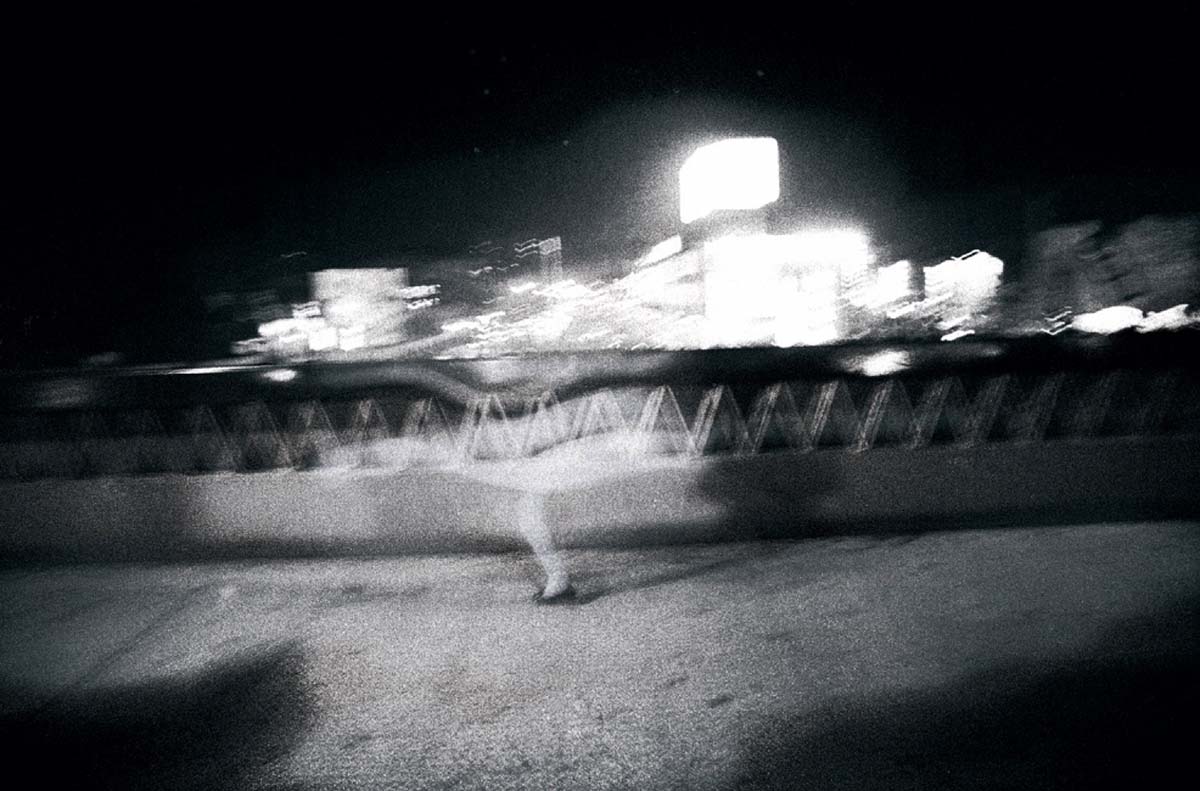
我不會害怕宣稱此一作品是謝春德最令人不安的圖像之一,我會把它和〈西門町〉(1969,圖7)相聯,雖然這件作品完全是 絕對地相反。它和前一件作品同樣是結構嚴明的:畫面被橋上呈「之字形」的柵欄分隔為兩個部份,一位女性的形象在運動和 光影中消散。城市位於遠方,被消費自戀的光芒所佔領,似乎是在威脅要吞沒此一以運動逃離地獄的身體。不可抗拒地,我會 聯想到天火中燃燒的風景:在其中,著火的自然,威脅著要將一位夏娃驅離一個滿是樹石的樂園。很有可能這次展覽藝術家回 顧了可稱之為「少年時期」的作品,顯露甚至肯定其全體作品的印記是受到生命因燃燒而為毀滅威脅。在近作中他使用了色彩, 但並沒有減弱這種末世的折磨,因為對這藝術家而言,由進步所造成的災難及對自然命運的無情乃是他進行這些影像構圖的主 要熱情所在。我們可否假設說採用顏色更能表現天火的恐怖?
在結束回顧這些年歲接近半世紀的影像前,我要強調謝春德在方法上例外的恆常性,因為我的發現並未帶來驚奇:遠在「造形 攝影」(la photo plasticienne)於美術館和畫展牆面大佔上風的年代之前,謝春德即早熟地把攝影行動設想為主要是一種場面 調度的行動。
那麼我們是否可以把這些作品視為「造形攝影」潮流中的一員呢?無疑有必要發明一個新的詞語,它能避免指涉活人畫(tableau vivant),又能說明此一介於攝影和電影間的發展。謝春德的巨大構圖承載了靜止的表演以及動態的憂慮。它們距離電影的世 界很遠。但有一些影像卻能上溯電影的影像記憶如大島渚,或是像陳果這樣不那麼「經典」的電影創作者。這裡涉及的毋是將 其場面調度相互趨近。謝春德的每一件攝影作品——這個方法是由60 年代便開始運用——都是長時間程序和漫長準備的結果: 經過勘場、「演員」排演、草圖、特定的服裝及其它許多準備工作,才能在一張單獨的照片中得到可以稱之為「濃縮電影」的 結果,或是沒有其它只有一張的單張電影「停格靜照」… 使得謝春德和其它當代藝術家影像得以區別的,是其影像中多方面有 關視覺的立場選擇,它們使得再現失去平靜,並且表達出製作上的複合性。我以物質和影像間的對立來指稱它們,但還有許多 其它面向。
今天回顧起來,我只看到一位藝術家利用攝影媒材同時能把紀錄的雄心和詩的抒情連在一起:傑夫‧ 渥爾(Jeff Wall)。雖然 這兩位藝術家之間有可觀的距離,這距離不只能用溫哥華和台北之間的遙遠地理距離來解釋,他們給予攝影的場面調度重要性 的程度,可以和當今的問題的聚焦程度相合,而這是一個影像比什麼都容易製作的時代。但,作什麼影像呢?當然,有許多造 形藝術家在工作室中願花時間來「滿載」其佈景和拍攝。但這其實經常只是,甚至大部份的個案都是,參與營造一個媚俗的佈 景。像謝春德這樣的一位藝術家,則很可能是在拍攝可以進行的長久之前,接近遺忘了拍攝時的決定性瞬間,已在思考和「反 省」這個世界的罪惡及苦難。
English
The condensed cinema of Hsieh Chun -Te
There is an expression in French, “avoir de la suite dans les idées,” which is used to describe fidelity to one’s ideas, a grounding in inaugural positions whose secret, personal motivations are then enriched, redeployed and redistributed along the way.
Ever since the 1960s Hsieh Chun-Te has been constructing his universe with unfailing assurance and constancy. Some of his key motifs originated in those years. Which is not to say that making the later work, including the most recent series, TENKY, has been calm, smooth sailing. Calm is not what distinguishes Hsieh’s work from that of other contemporary artists. That said, “luxury and pleasure,” to take the two other terms from the famous title by Henri Matisse (luxe, calme et volupté), have often featured in the work of this Taiwanese artist.
A superficial approach to this work might place it within an international tendency bringing together such artists as Gilbert and George, Joël-Peter Witkin, Pierre & Gilles and David LaChapelle: in other words, a tendency that uses the photographic medium to create installations in which magnified or manipulated bodies are set in landscapes whose artificial lighting blurs the frontiers between the truth of nature and the artifice of the studio. But that would be to make a mistake about Hsieh’s world and visual project. The retrospective approach recently initiated by the artist, allowing us to rediscover his works from the 1960s, gives a better idea of its specificity.
Right from the start, Hsieh’s exceptional palette was black and white. What will impress us today, ideally, will not be just the infinite modulation of greys, something most twentieth-century masters of photography also aimed to achieve. No, Hsieh’s obsessions lie elsewhere. They are embodied, more particularly, in the conflicts between focus and the diffraction of light, between the sharp and the blurred, between the clarity of the contours and the grain of the prints. The artist’s other obsession lies in the conflict between forms of matter: marshes and epidermises, the accumulation of stones and capillary streams, the amorphous fragility of bodies and sculpted power of machines.
The images we are seeing today, most of them made in the late 1960s, could be interpreted as fragments of life captured in the urgency of encounters accompanied by the accidents due to precipitousness. In fact, these images already express Hsieh’s simultaneously symbolist and abstract ambition.
Note: symbolist and not symbolic. There is a subtle distinction between the late nineteenth-century movement in painting and poetry, Symbolism, from the attempt to bestow a secondary meaning on the organisation of forms. There is, indeed, an undeniable symbolism in Hsieh’s work, and especially recently. From Gustave Doré to Burne Jones, from Alfred Kubin to William Blake, we can discern the influence in the way the bodies are placed and in their confrontation with nature, all being part of a lyrical poetry which is ultimately concerned with conflict between tellurian and celestial forces. Most of all, though, these images which inaugurated Hsieh’s work manifest a torment of abstraction. Image 01 is an extreme close-up on a body which fills almost all the space. As ever, there is a troubling eroticism in Hsieh’s vision. Here, the framing suggests that the woman’s dress is billowing up outside the frame. The close-up depraves the forms of the body and, upon close observation, there is utter uncertainty as to whether this figure is truly a human or just a doll, a living being or a lifeless dummy. Furthermore, the photo is backlit, and the bright light coming through the window “burns” the outlines of the exhibited body. Like a vampire, this mysterious silhouette seems to be eaten up by the light, disintegrating into an incandescent powder. That is why I feel I can speak here of Hsieh’s “abstract torment”: the disappearance of figures, and a kind of terror of light, which are later developed to an apocalyptic degree in the Tenky series.
Photo 02 uses and abuses light. No doubt it is the same window through which the fire passes here. But the interplay between appearance and disappearance in the previous image is acted out in this instance by the body reclining in the light, its nudity carefully hidden/revealed by the artist. This body on which the black of an uncertain garment (rubber or leather?) opposes the white of the skin (the dazzling complexion of the buttocks), replays within the image the contrast between light and shadow which geometrically structures the space and references the medium itself.
Image 06 is even more audacious. I mentioned earlier the coexistence of the human body and the machine. This image is one of the finest examples of this relationship which evokes a vision pertinent to both Taiwan and the big city of Taipei traversed by waves of motorbikes and scooters. Hsieh’s image is interesting because the image it conveys is one of immobility. What we see is clearly a garage, with the machines at rest. It is their shine and shape that the artist wants to bring to our attention: hence the close-up on the right of the coachwork of one of these machines. In addition to this, however, a young girl who could otherwise be bestriding one of these engines is lying on the floor, between them. And this languorous abandon creates an equivalence between the mechanical and the human orders. Image 04 provides comparable reasons for surprise. On a waste ground – the French term terrain vague conveys its imprecise urban status and formlessness, its atmosphere of disquiet and expectancy – the remains of a car occupy the centre of the image. In the opening previously filled by the window of a door now reduced to paltry remains, a human body has been thrust – all we can see are the legs sticking up skywards. What are we to think? Has the body fallen from a great height? Fallen from another vehicle, as suggested by the aeroplane taking off in the background? Hsieh’s approach here is probably meant to be humorous. But it is no doubt more gravely pessimistic if we consider the equivalence between the piece of scrap and the equally ruined body sticking out of it, which appears to have met its fate at the same time as the vehicle in which it remains imprisoned. In addition, might this be a way for the artist to evoke the coming fate of those who are flying in that distant jet? Or is the artist making another suggestion? Are the modern city seen to the left of the image and the people who live there both headed for the fate of the enigmatic composition in the centre of the image? Or, finally, is the central motif the metaphor for this city in the background? Here the image’s symbolist ambition cannot be separated from its symbolic intent. This picture comes some twenty years before the Raw series, and yet it could easily be part of it. Like that series, image 04 was made on the basis of a strategy of a twofold delay or wait This strategy lies at the heart of Hsieh’s aesthetic, well beyond the RAW series, and still constitutes a founding principle in the recent works.
The first wait is the one that corresponds to the time of making the photo as such, the exposure time needed to imprint the scene on the film. This variable exposure time depends on the quality of light. But we may assume that the quality of the images and the final form they take on the gallery or museum walls will have been taken to justify the attentive adjustments made during the production process.
The second wait is for “the right moment” to capture the scene. This is not the “decisive moment,” to use the term from French humanist photography. It is a “good moment,” a moment that has been waited and hoped for and, of course, prepared and programmed. In the photograph here, it was necessary that the aeroplane cross the image for a fraction of a second. The artist had to wait in order to capture this ensemble. The actor in the image, whose legs are all we see, had to wait in that uncomfortable and acrobatic position. Another thing the artist and actor had to wait for was for the sun to be so positioned that the shadow of the two legs was visible “in the right place.” We know that Hsieh does not manipulate his images. He stages them, composes them like a painter, but he does rehearse them, and does not always succeed. He makes them subtly, like a film director. And although that body “thrown on the scrap heap” signifies an undeniable pessimism and a despair that bodes only ill for the future of humanity, the very making of this image, on the contrary, betrays a paradoxical optimism as to the possibility of its success. The artist’s attentive patience has allowed a successful balance between objects placed seemingly by chance in an unlikely place, bodies that pose, and a fleeting event. The image is thus complex beyond its immediate, burlesque effect of surprise. This is a complexity of both production and conception.
Among the images from the past, two textural pieces stand out. Image 05 represents a kind of swamp or, more exactly, a landscape of dunes covered with the kind of vegetation that grows on river estuaries. The solar star is still there and it consumes part of the horizon. A first third of the image is darkened by the plants that grow in floodable areas. Then, in the middle plane, sandy ground that is marbled or flecked like a carpet on which walks a figure of whom we see only the immaculately white back, and whose hair seems to merge with the foliage on the ground. This unexpected metamorphosis resulting from the decapitation of the figure moving towards the centre of the image bestows a strange status on the body, as un unidentified object which reveals, by contagion, the general tendency of the representation of landscape towards abstraction. There is nothing “documentary” about Hsieh’s vision. Like the vanity that Blaise Pascale condemned in painting, one could justifiably designate comparable consequences in Hsieh’s photographic tableaus. But the word vanity could also be used with another meaning, again taken from the field of painting: Hsieh Chun-Te’s photographic tableaus encourage us to meditate on the instability of signs and forms that specify humanity. The Taiwanese artist, eyewitness on an island that for many years has felt an anxious political precariousness in the face of the immense nearby land from which it has separated, and from which it protects itself, has real legitimacy when it comes to expressing the ephemeral fate of all humanity, and he does so with genuine metaphysical ambition.
Figure 07 is even more impressive in terms of the clash of materials. The chaos of stones is represented in such a way as to seem without limits, extending beyond the frame, in an all-over approach which creates a tellurian darkness in the image. At the top of one of the biggest rocks is a face extended by slender shoulders. Reminiscent of Mélisande’s fountain-like locks, the hair comes down to the lower edge of the image. The picture could be seen as a reverse version of Botticelli’s Birth of Venus. The whiteness of the epidermis, the frozen, gaping eyes, the neglected hair, without a trace of wind, all suggest death rather than birth, doubt about the endurance of the human rather than reborn confidence.
But the disquiet exuded by this image, with its admirable movement of lines and modulated greys comparable to the drawings and washes of ancient China, is counterbalanced by the formal boldness and, once again, the message. This image may trouble and frighten because of the ghostly appearance that has neither consistency nor volume. Nevertheless, it is the brightness of this face which engenders an undeniably hypnotic effect on the beholder.
I have no hesitation in arguing that this work by Hsieh Chun-Te is one of his most disturbing icons, one that I would link and at the same time contrast with the incredible, absolutely antagonistic image 03. Just as structured as the preceding images, structured in two parts separated by the zigzag of the parapet of a bridge, a female form melts into the movement of the light. The distant city, carried away in the narcissistic brightness of the lights of consumption, seems to threaten to swallow up this moving body in order to escape hell. It irresistibly reminds me of the Tenky series in which flaming nature threatens an Eve who has been expelled from a scrubby, stony paradise. It is likely that the artist’s return to what could be considered “youthful works” has revealed or even confirmed that his whole body of work is marked by the fundamental threat of the destruction of life by combustion. And the use of colour in the recent works has not diminished the apocalyptic torment of an artist from whom the disasters of progress and indifference to the natural fate of the world are to a large extent what drives his passion in composing images. Might we posit that colour serves this incendiary terror even more effectively?
To conclude this look back over works that are nearly half a century old, I would like to emphasise the remarkable constancy of Hsieh’s method. Well before artist’s photography became dominant on museum and gallery walls, I note with great surprise that Hsieh was already conceiving of the photographic act as essentially an act of staging.
But then, should we really consider this work as belonging to the trend of artist’s photography? No doubt we need to find another term than the French photographie plasticienne, one that, in avoiding reference to the tableau vivant, would designate an undertaking somewhere between photography and cinema. It is not a matter of comparing results. Hsieh’s large-scale photographic compositions make no attempt to hide their immobile performance and their dynamic disquiet. They are far from the world of cinema. However, a few images might bring back memories of the films of Nagisa Oshima, for example, or, to take a less “classical” filmmaker, Fruit Chan.
The point here is similarity of mise-en-scène. Each of Hsieh’s photographs – and this is a method that he began to apply as early as the 1960s – is the final step in a slow process and a long preparation that comprises finding locations, rehearsing with the “actors,” making anticipatory sketches, designing special costumes and many other preparatory actions that will obtain what one could think of as a film condensed into a single photograph, or the equivalent of a single frame – but with nothing before or after. What distinguishes Hsieh’s highly constructed images from the images of other contemporary artists is the multiplicity of visual approaches within each image. These destabilise the representation and express the complexity of its making. I am referring here, among many other aspects, to the oppositions in the textures of the image.
Looking back today, I can think of only one artist working in the medium of photography who combines documentary ambition with poetic lyricism: Jeff Wall. Notwithstanding the considerable distance between them, a distance that is more than just the geographical distance between Vancouver and Taipei, these two artists accord an importance to their photographic staging proportionate to the weight of contemporary issues, and do so at a time when nothing is easier than making images. But what images? Of course, many artists take time in their studio to painstakingly build up the compositions in their photos. But in most cases, sadly, the result is just a kitsch backdrop. No doubt, then, it is long before the shot can be taken that an artist like Hsieh, almost forgetting the decisive moment of shutter release, reflects on the world’s besetting ills.
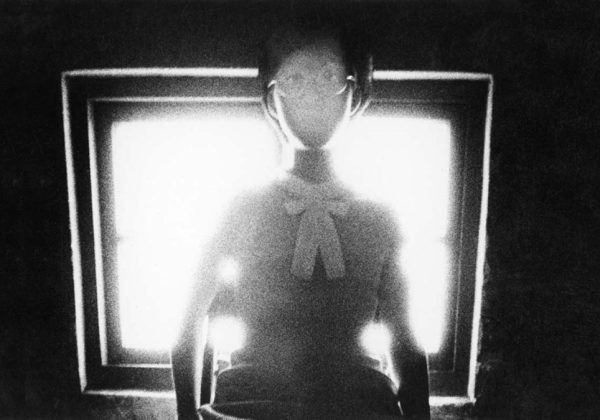
圖1:謝春德,〈第一次個展-窗〉,1968
Fig.1: Hsieh Chun-Te, First Solo Exhibition - Window , 1968
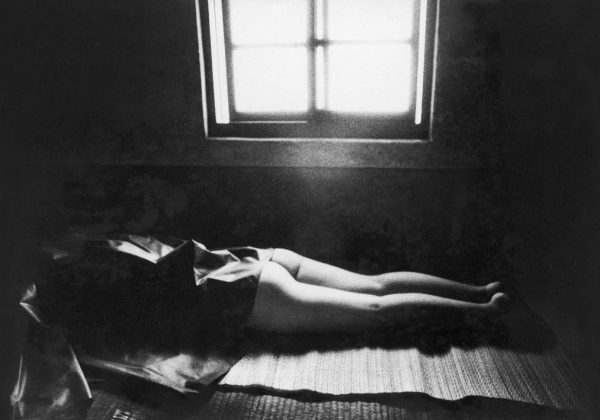
圖2:謝春德,〈第一次個展-床〉,1969
Fig. 2: Hsieh Chun-Te, First Solo Exhibition - Bed , 969
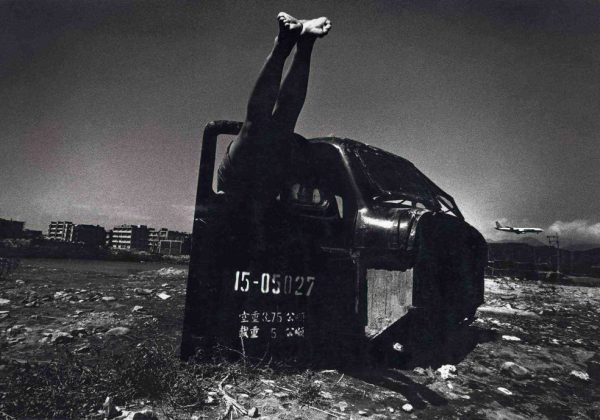
圖4:謝春德,〈第一次個展-伸向天空〉,1968
Fig. 4: Hsieh Chun-Te, First Solo Exhibition - Outstretch into the Sky , 1968
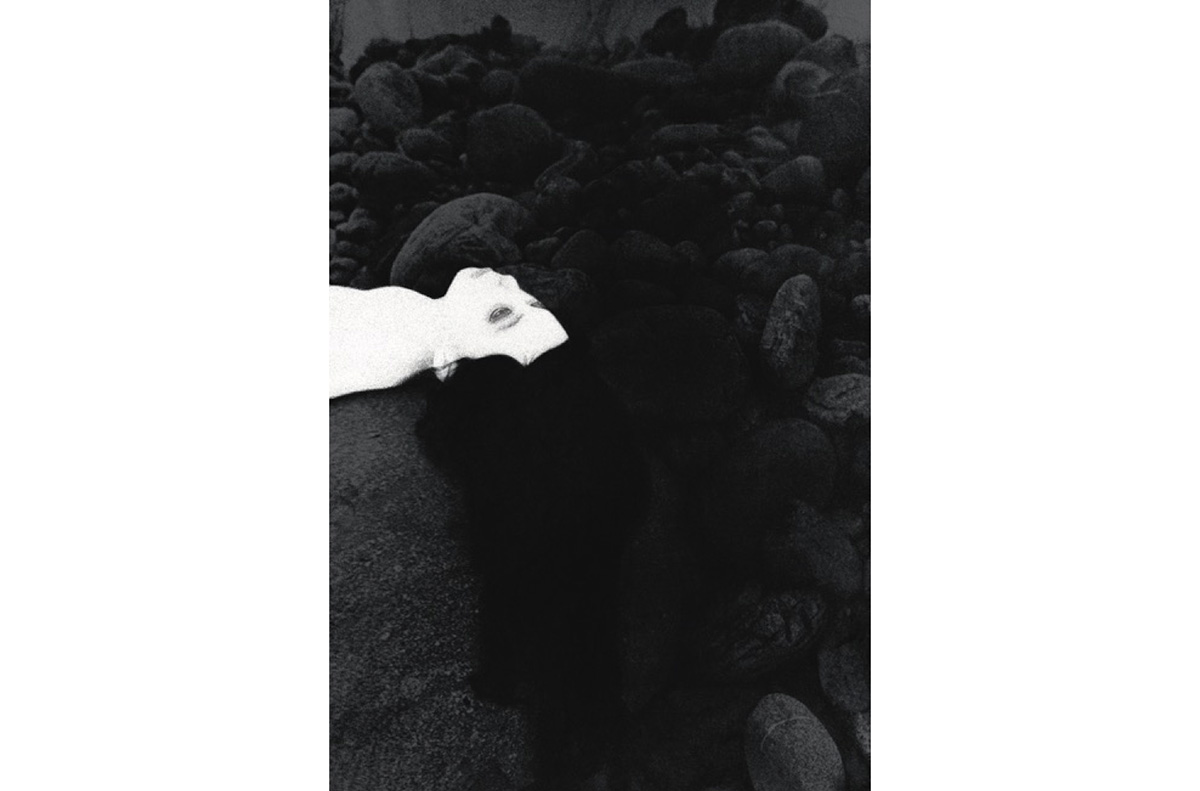
圖6:謝春德,〈第一次個展-河床〉,1968
Fig. 6: Hsieh Chun-Te, First Solo Exhibition - Riverbed , 1968
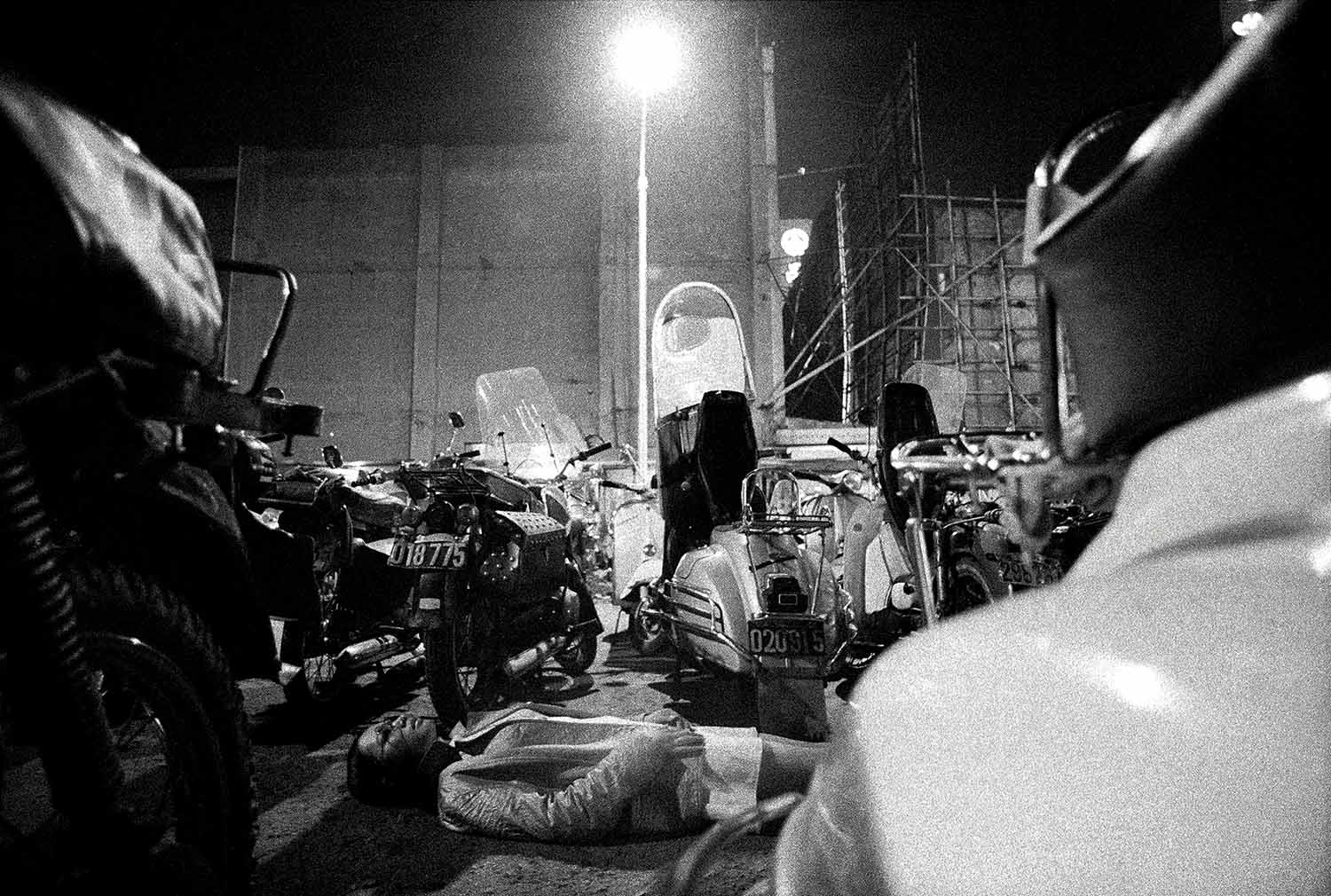
圖3:謝春德,〈第一次個展-夜未盡〉,1968
Fig. 3: Hsieh Chun-Te, First Solo Exhibition - Endless Night , 1968
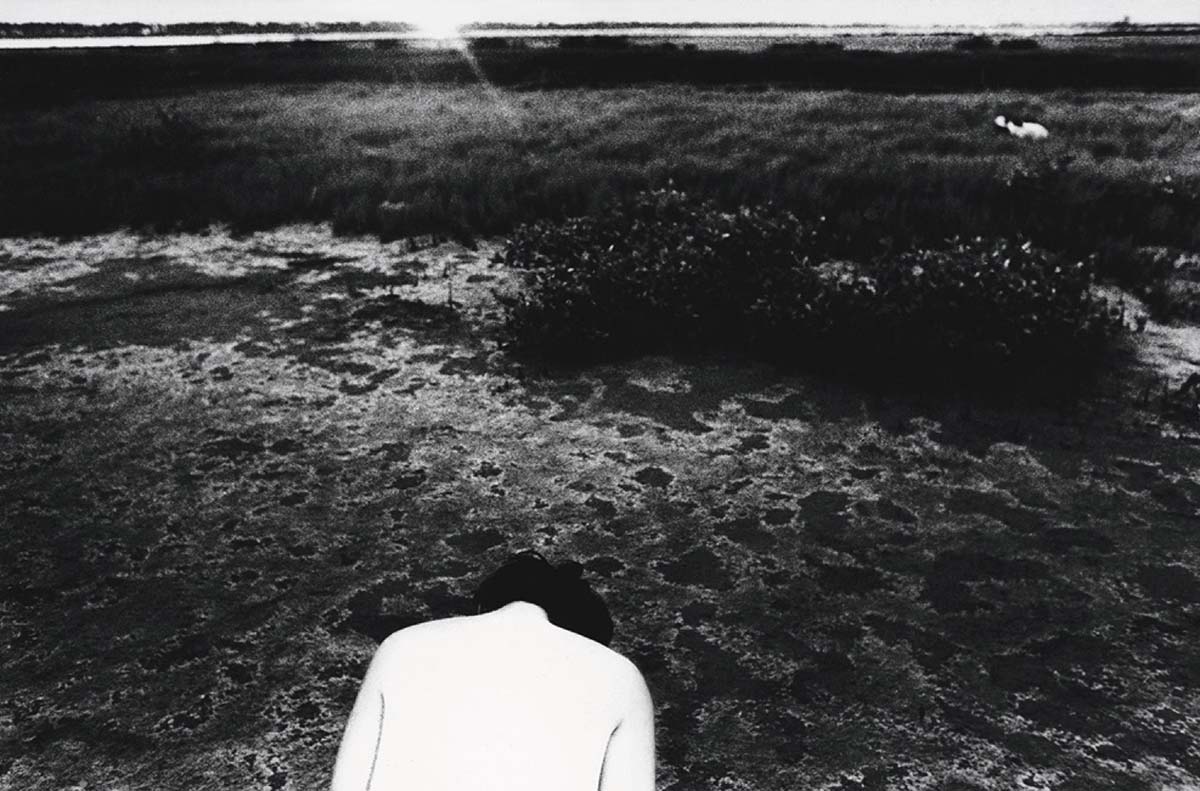
圖5:謝春德,〈第一次個展-沼澤〉1968
Fig. 5: Hsieh Chun-Te, First Solo Exhibition - Swamp 1968