1969 First Exhibition
The condensed cinema of Hsieh Chun -Te
Dominique Païni
(Critic, Professor at the Collège de France, Former Director of the Cinémathèque Française, Former Deputy Director of the Centre Pompidou)
There is an expression in French, “avoir de la suite dans les idées,” which is used to describe fidelity to one’s ideas, a grounding in inaugural positions whose secret, personal motivations are then enriched, redeployed and redistributed along the way.
Ever since the 1960s Hsieh Chun-Te has been constructing his universe with unfailing assurance and constancy. Some of his key motifs originated in those years. Which is not to say that making the later work, including the most recent series, TENKY, has been calm, smooth sailing. Calm is not what distinguishes Hsieh’s work from that of other contemporary artists. That said, “luxury and pleasure,” to take the two other terms from the famous title by Henri Matisse (luxe, calme et volupté), have often featured in the work of this Taiwanese artist.
A superficial approach to this work might place it within an international tendency bringing together such artists as Gilbert and George, Joël-Peter Witkin, Pierre & Gilles and David LaChapelle: in other words, a tendency that uses the photographic medium to create installations in which magnified or manipulated bodies are set in landscapes whose artificial lighting blurs the frontiers between the truth of nature and the artifice of the studio. But that would be to make a mistake about Hsieh’s world and visual project. The retrospective approach recently initiated by the artist, allowing us to rediscover his works from the 1960s, gives a better idea of its specificity.
Right from the start, Hsieh’s exceptional palette was black and white. What will impress us today, ideally, will not be just the infinite modulation of greys, something most twentieth-century masters of photography also aimed to achieve. No, Hsieh’s obsessions lie elsewhere. They are embodied, more particularly, in the conflicts between focus and the diffraction of light, between the sharp and the blurred, between the clarity of the contours and the grain of the prints. The artist’s other obsession lies in the conflict between forms of matter: marshes and epidermises, the accumulation of stones and capillary streams, the amorphous fragility of bodies and sculpted power of machines.
The images we are seeing today, most of them made in the late 1960s, could be interpreted as fragments of life captured in the urgency of encounters accompanied by the accidents due to precipitousness. In fact, these images already express Hsieh’s simultaneously symbolist and abstract ambition.
Note: symbolist and not symbolic. There is a subtle distinction between the late nineteenth-century movement in painting and poetry, Symbolism, from the attempt to bestow a secondary meaning on the organisation of forms. There is, indeed, an undeniable symbolism in Hsieh’s work, and especially recently. From Gustave Doré to Burne Jones, from Alfred Kubin to William Blake, we can discern the influence in the way the bodies are placed and in their confrontation with nature, all being part of a lyrical poetry which is ultimately concerned with conflict between tellurian and celestial forces. Most of all, though, these images which inaugurated Hsieh’s work manifest a torment of abstraction.
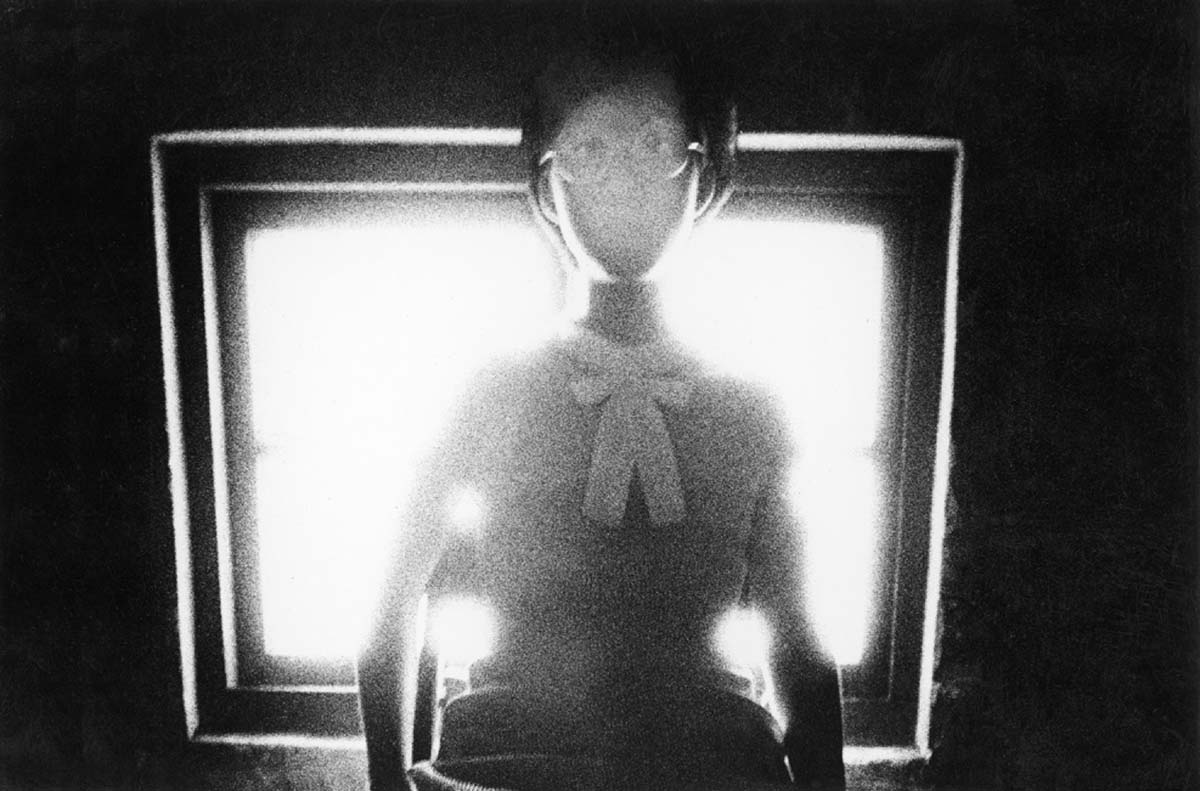
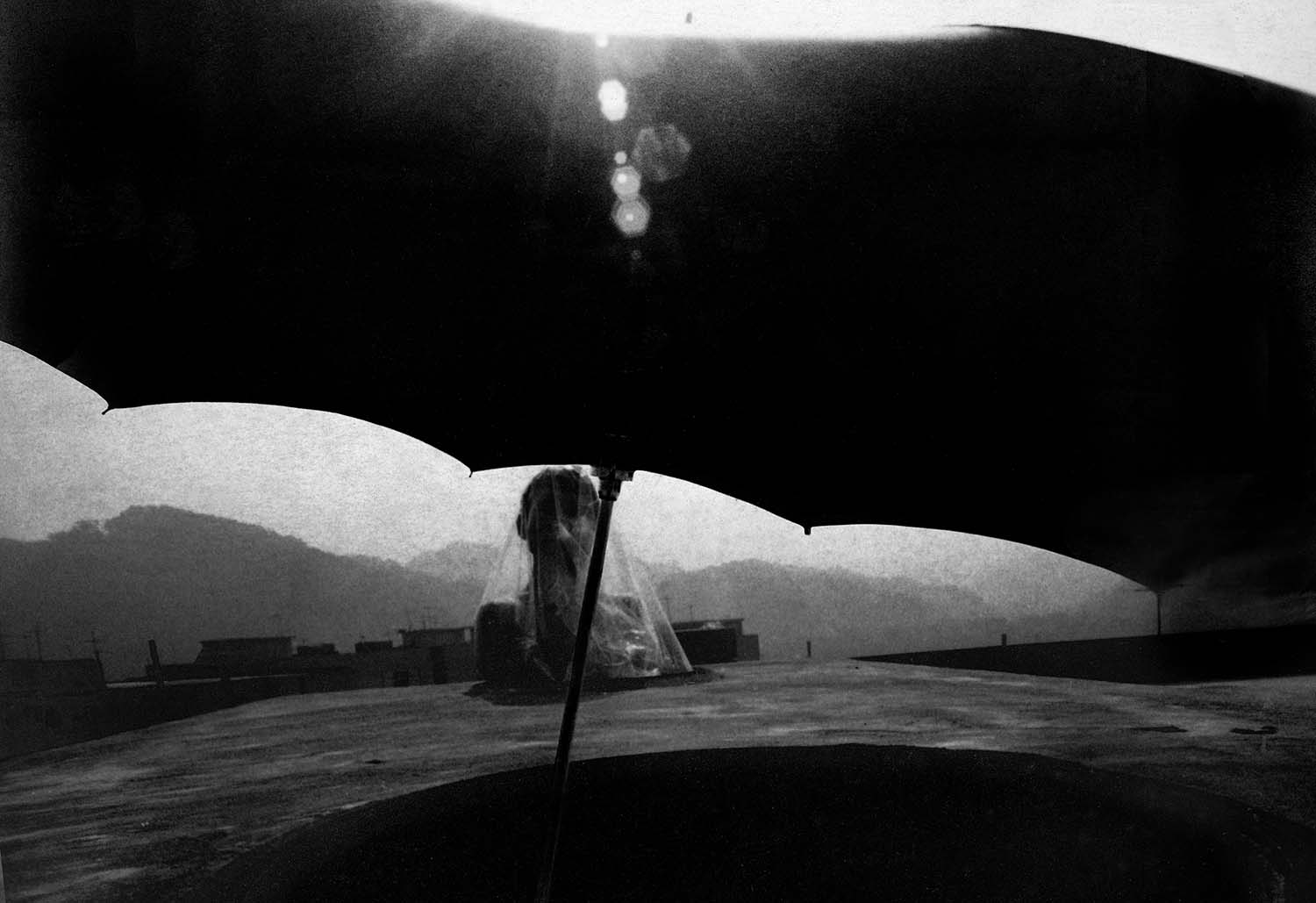
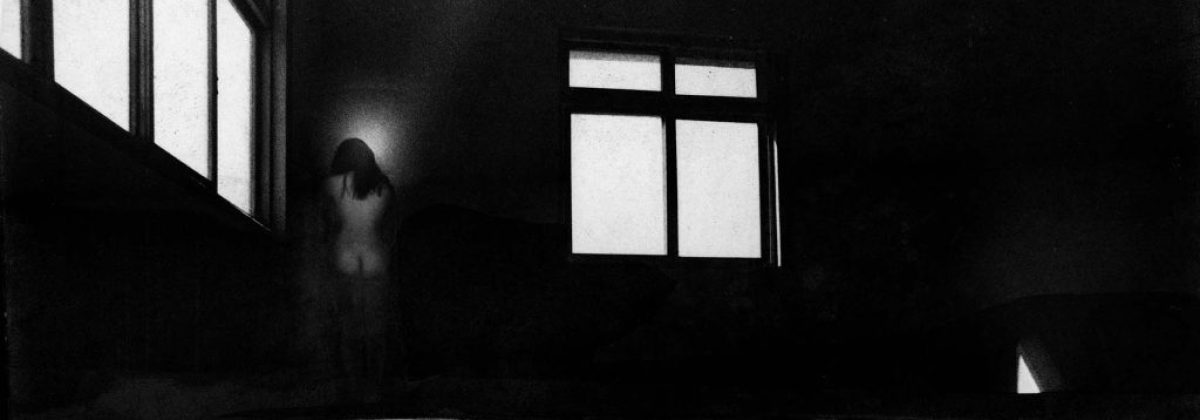
 [ Window ] 1968
Image 01 is an extreme close-up on a body which fills almost all the space. As ever, there is a troubling eroticism in Hsieh’s vision. Here, the framing suggests that the woman’s dress is billowing up outside the frame. The close-up depraves the forms of the body and, upon close observation, there is utter uncertainty as to whether this figure is truly a human or just a doll, a living being or a lifeless dummy. Furthermore, the photo is backlit, and the bright light coming through the window “burns” the outlines of the exhibited body. Like a vampire, this mysterious silhouette seems to be eaten up by the light, disintegrating into an incandescent powder. That is why I feel I can speak here of Hsieh’s “abstract torment”: the disappearance of figures, and a kind of terror of light, which are later developed to an apocalyptic degree in the Tenky series.
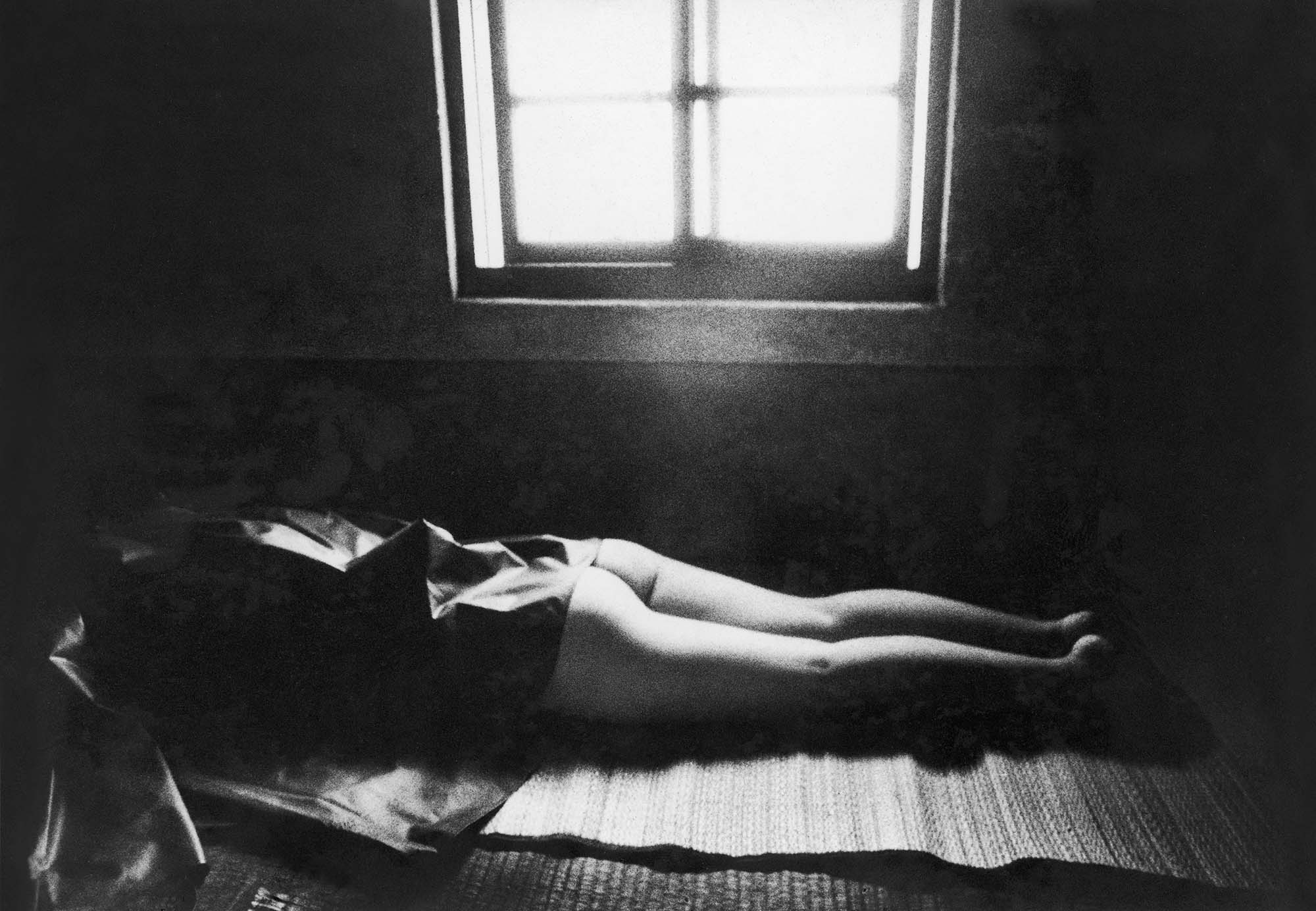 [ Bed ] 1968
uses and abuses light. No doubt it is the same window through which the fire passes here. But the interplay between appearance and disappearance in the previous image is acted out in this instance by the body reclining in the light, its nudity carefully hidden/revealed by the artist. This body on which the black of an uncertain garment (rubber or leather?) opposes the white of the skin (the dazzling complexion of the buttocks), replays within the image the contrast between light and shadow which geometrically structures the space and references the medium itself.
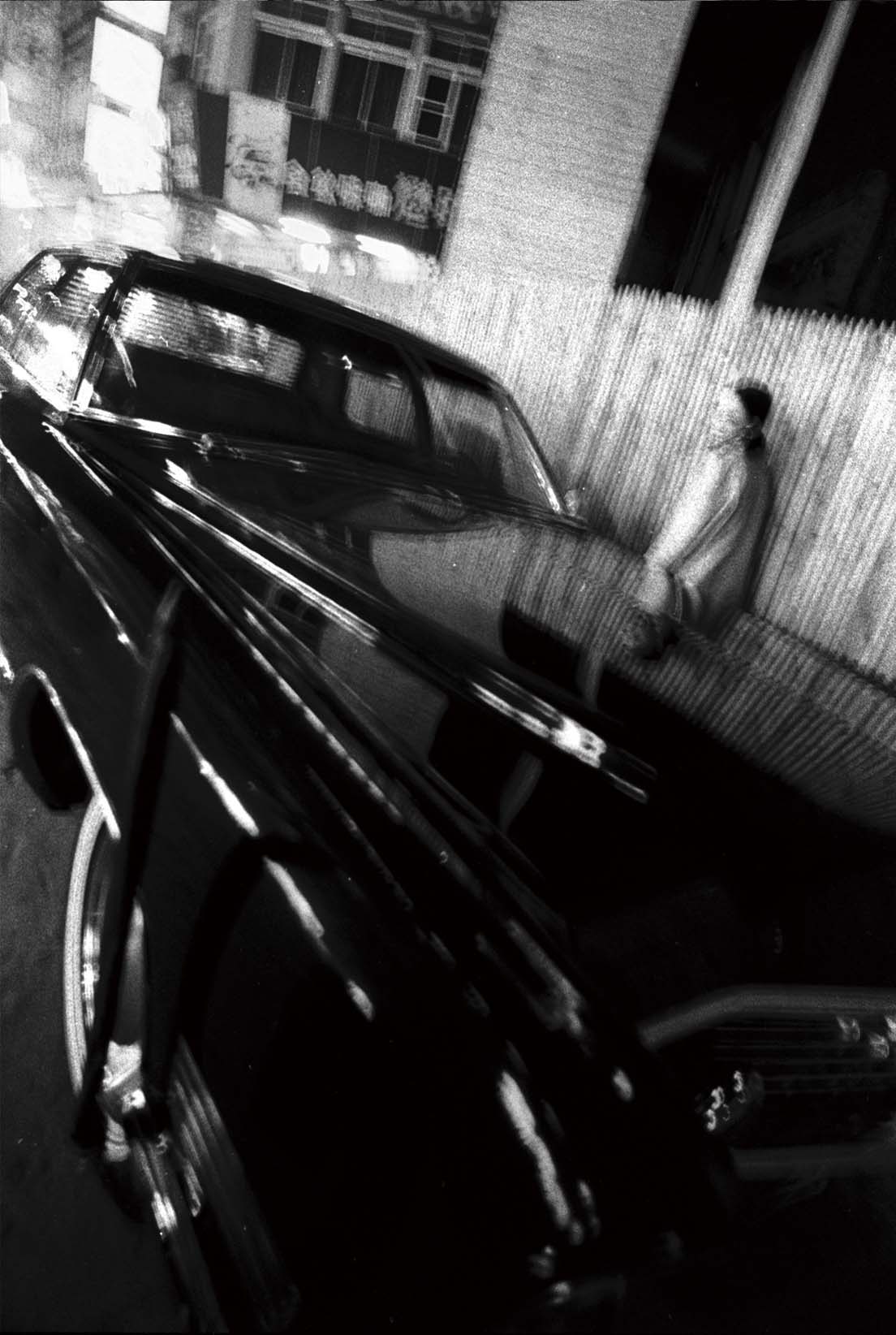
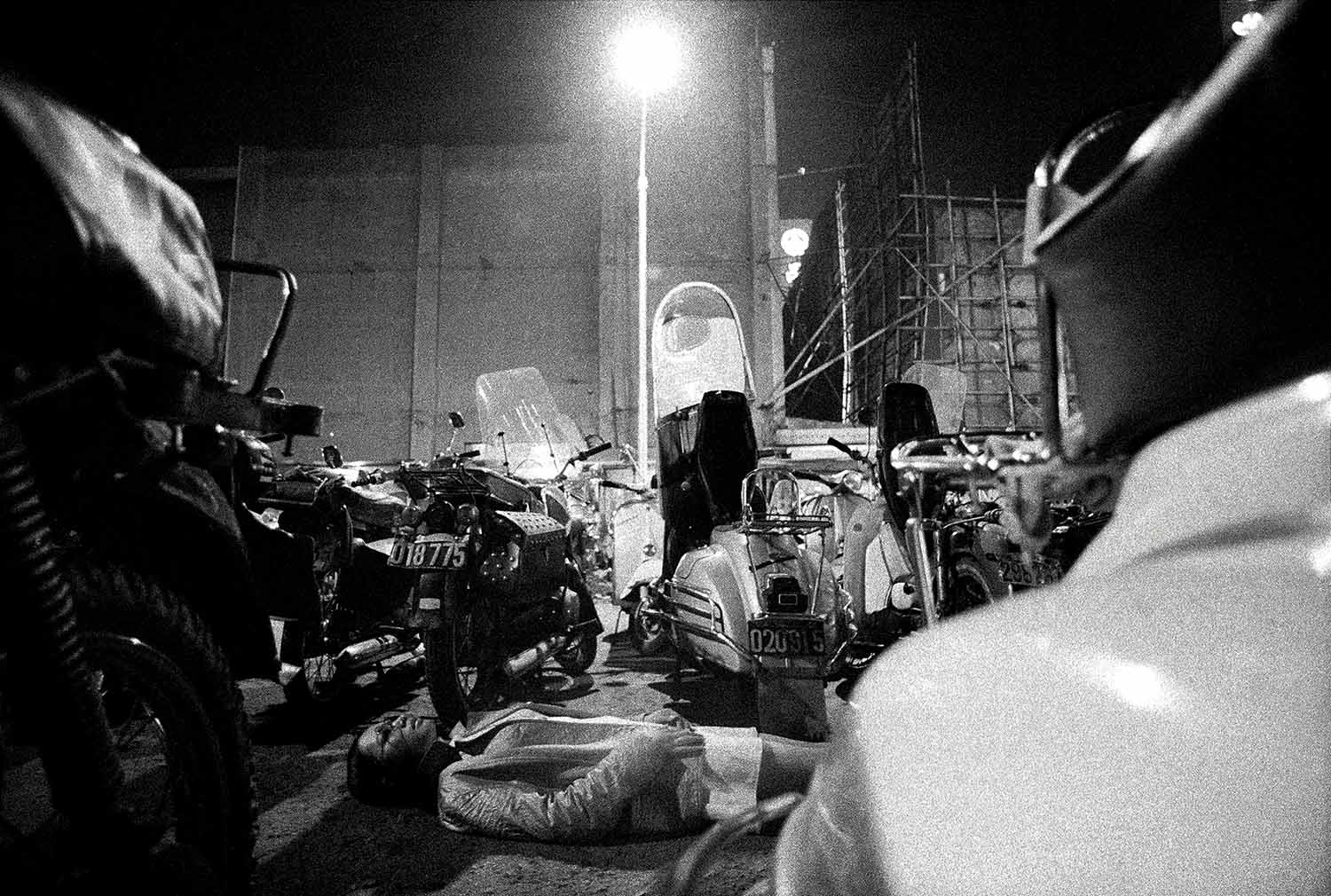 [ Endless Night ] 1968
Endless Night is even more audacious. I mentioned earlier the coexistence of the human body and the machine. This image is one of the finest examples of this relationship which evokes a vision pertinent to both Taiwan and the big city of Taipei traversed by waves of motorbikes and scooters. Hsieh’s image is interesting because the image it conveys is one of immobility. What we see is clearly a garage, with the machines at rest. It is their shine and shape that the artist wants to bring to our attention: hence the close-up on the right of the coachwork of one of these machines. In addition to this, however, a young girl who could otherwise be bestriding one of these engines is lying on the floor, between them. And this languorous abandon creates an equivalence between the mechanical and the human orders. <On a waste ground > provides comparable reasons for surprise.
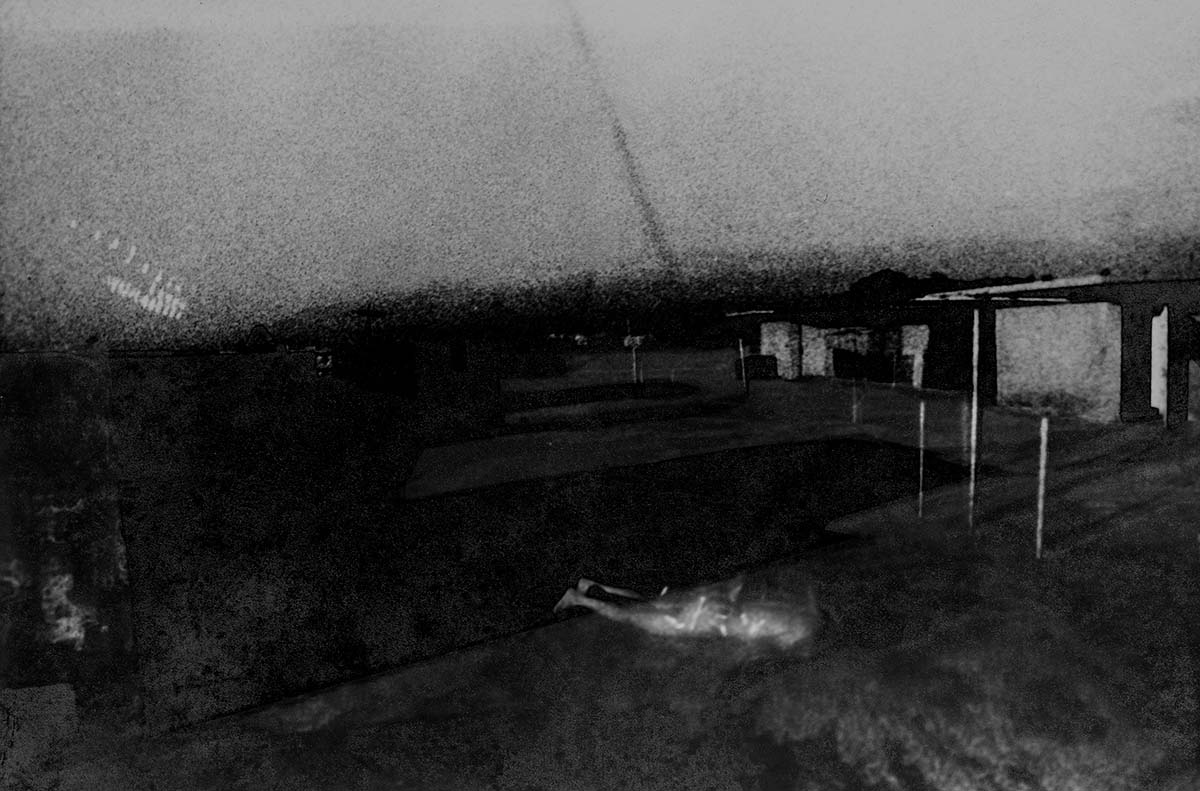
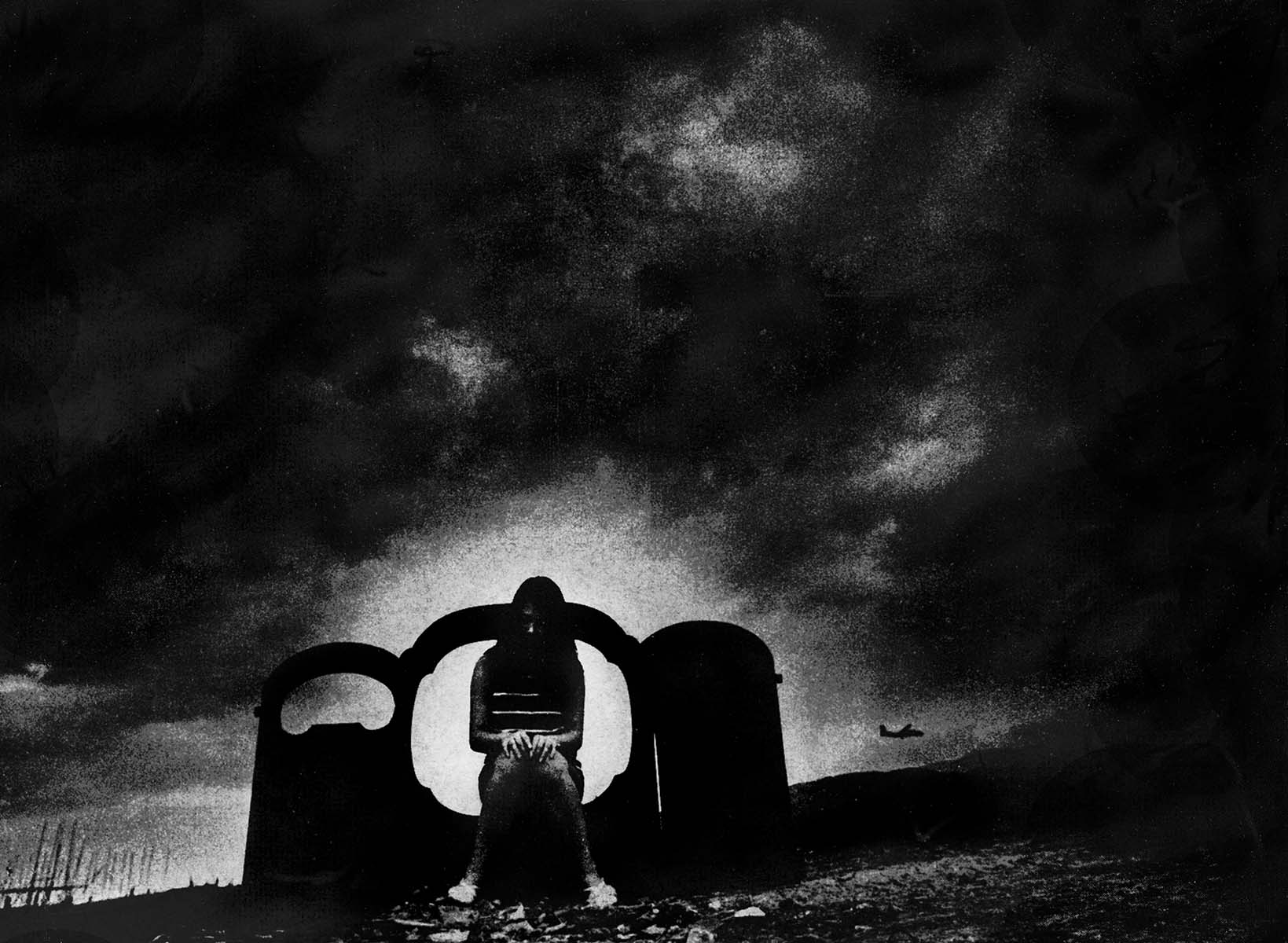
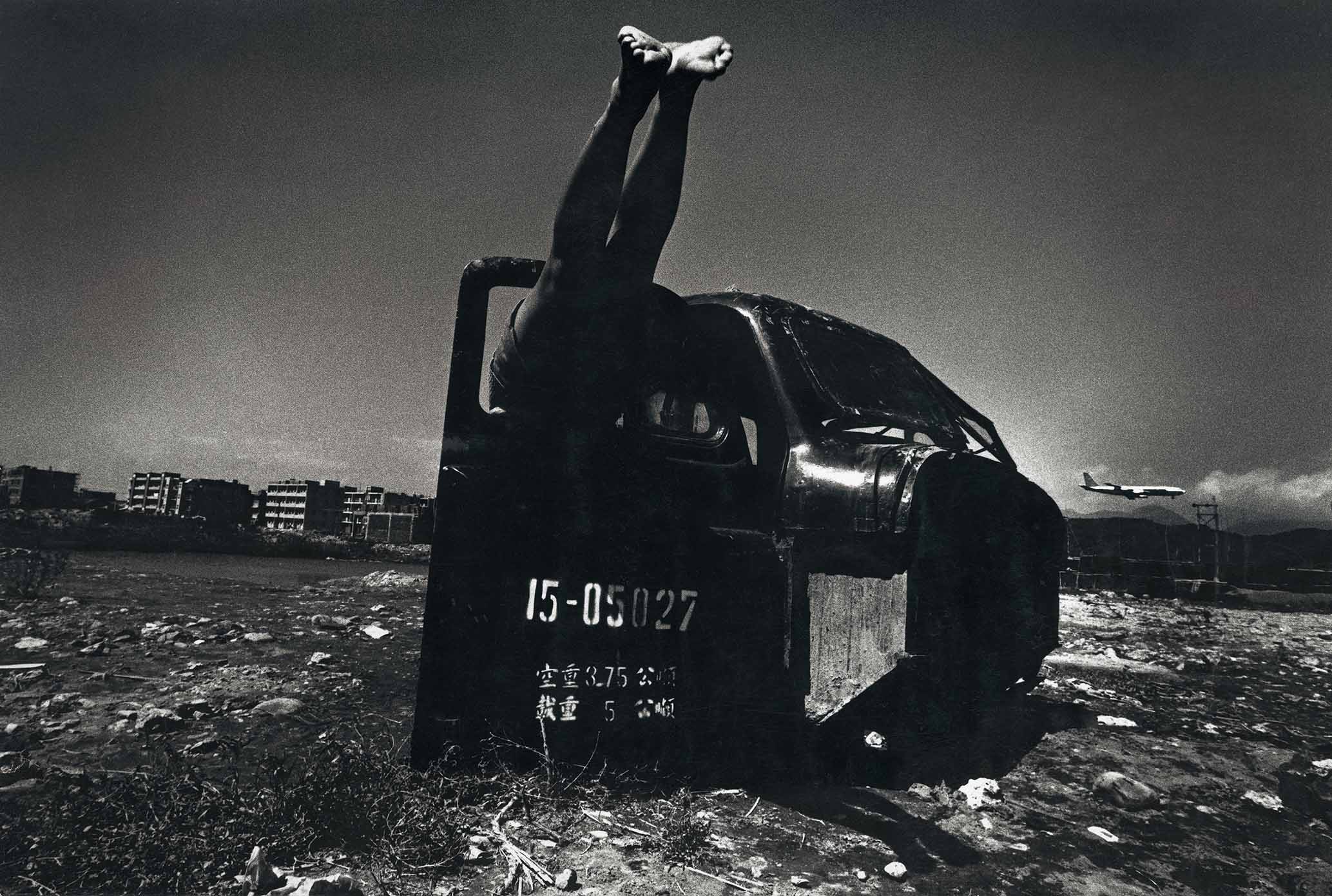 [ Dutstretch into Sky ] 1968
The French term terrain vague conveys its imprecise urban status and formlessness, its atmosphere of disquiet and expectancy – the remains of a car occupy the centre of the image. In the opening previously filled by the window of a door now reduced to paltry remains, a human body has been thrust – all we can see are the legs sticking up skywards. What are we to think? Has the body fallen from a great height? Fallen from another vehicle, as suggested by the aeroplane taking off in the background? Hsieh’s approach here is probably meant to be humorous. But it is no doubt more gravely pessimistic if we consider the equivalence between the piece of scrap and the equally ruined body sticking out of it, which appears to have met its fate at the same time as the vehicle in which it remains imprisoned. In addition, might this be a way for the artist to evoke the coming fate of those who are flying in that distant jet? Or is the artist making another suggestion? Are the modern city seen to the left of the image and the people who live there both headed for the fate of the enigmatic composition in the centre of the image? Or, finally, is the central motif the metaphor for this city in the background? Here the image’s symbolist ambition cannot be separated from its symbolic intent. This picture comes some twenty years before the Raw series, and yet it could easily be part of it. Like that series, image 04 was made on the basis of a strategy of a twofold delay or wait This strategy lies at the heart of Hsieh’s aesthetic, well beyond the RAW series, and still constitutes a founding principle in the recent works.
The first wait is the one that corresponds to the time of making the photo as such, the exposure time needed to imprint the scene on the film. This variable exposure time depends on the quality of light. But we may assume that the quality of the images and the final form they take on the gallery or museum walls will have been taken to justify the attentive adjustments made during the production process.
The second wait is for “the right moment” to capture the scene. This is not the “decisive moment,” to use the term from French humanist photography. It is a “good moment,” a moment that has been waited and hoped for and, of course, prepared and programmed. In the photograph here, it was necessary that the aeroplane cross the image for a fraction of a second. The artist had to wait in order to capture this ensemble. The actor in the image, whose legs are all we see, had to wait in that uncomfortable and acrobatic position. Another thing the artist and actor had to wait for was for the sun to be so positioned that the shadow of the two legs was visible “in the right place.” We know that Hsieh does not manipulate his images. He stages them, composes them like a painter, but he does rehearse them, and does not always succeed. He makes them subtly, like a film director. And although that body “thrown on the scrap heap” signifies an undeniable pessimism and a despair that bodes only ill for the future of humanity, the very making of this image, on the contrary, betrays a paradoxical optimism as to the possibility of its success. The artist’s attentive patience has allowed a successful balance between objects placed seemingly by chance in an unlikely place, bodies that pose, and a fleeting event. The image is thus complex beyond its immediate, burlesque effect of surprise. This is a complexity of both production and conception.
Among the images from the past, two textural pieces stand out.
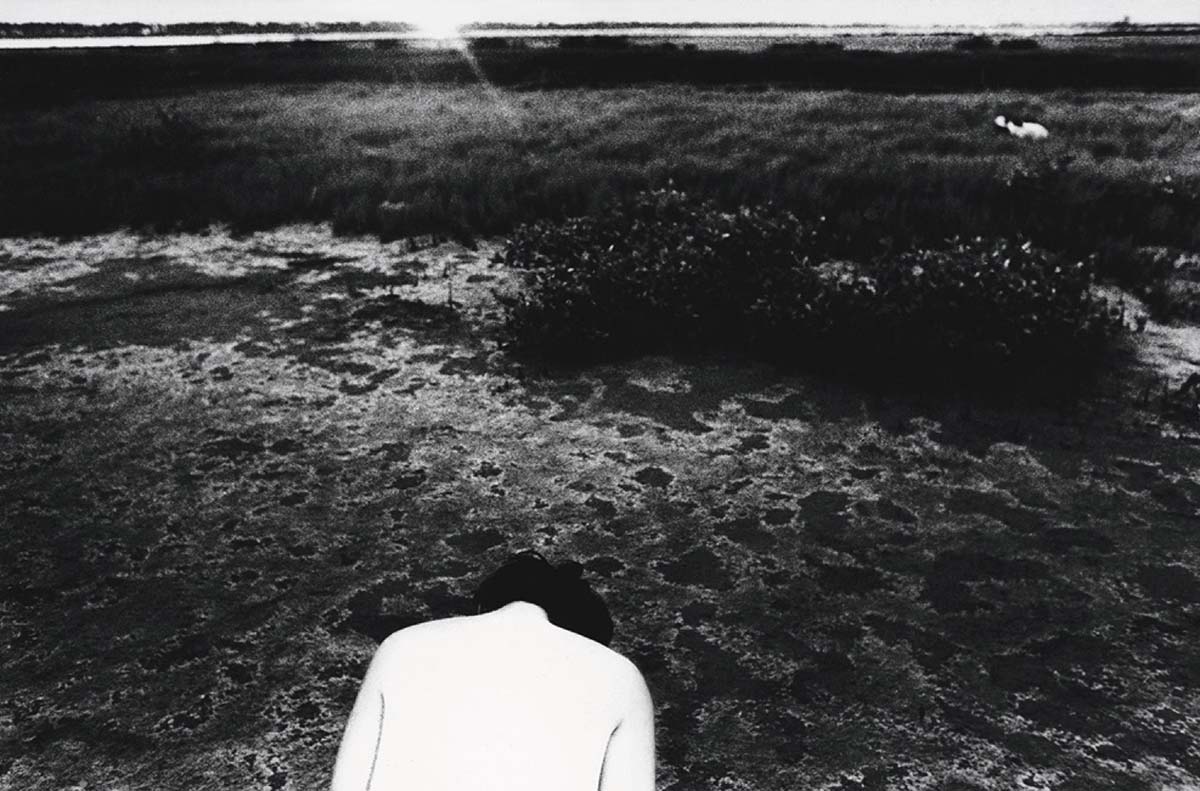
 [ Swamp ] 1968
Represents a kind of swamp or, more exactly, a landscape of dunes covered with the kind of vegetation that grows on river estuaries. The solar star is still there and it consumes part of the horizon. A first third of the image is darkened by the plants that grow in floodable areas. Then, in the middle plane, sandy ground that is marbled or flecked like a carpet on which walks a figure of whom we see only the immaculately white back, and whose hair seems to merge with the foliage on the ground. This unexpected metamorphosis resulting from the decapitation of the figure moving towards the centre of the image bestows a strange status on the body, as un unidentified object which reveals, by contagion, the general tendency of the representation of landscape towards abstraction. There is nothing “documentary” about Hsieh’s vision. Like the vanity that Blaise Pascale condemned in painting, one could justifiably designate comparable consequences in Hsieh’s photographic tableaus. But the word vanity could also be used with another meaning, again taken from the field of painting: Hsieh Chun-Te’s photographic tableaus encourage us to meditate on the instability of signs and forms that specify humanity. The Taiwanese artist, eyewitness on an island that for many years has felt an anxious political precariousness in the face of the immense nearby land from which it has separated, and from which it protects itself, has real legitimacy when it comes to expressing the ephemeral fate of all humanity, and he does so with genuine metaphysical ambition.
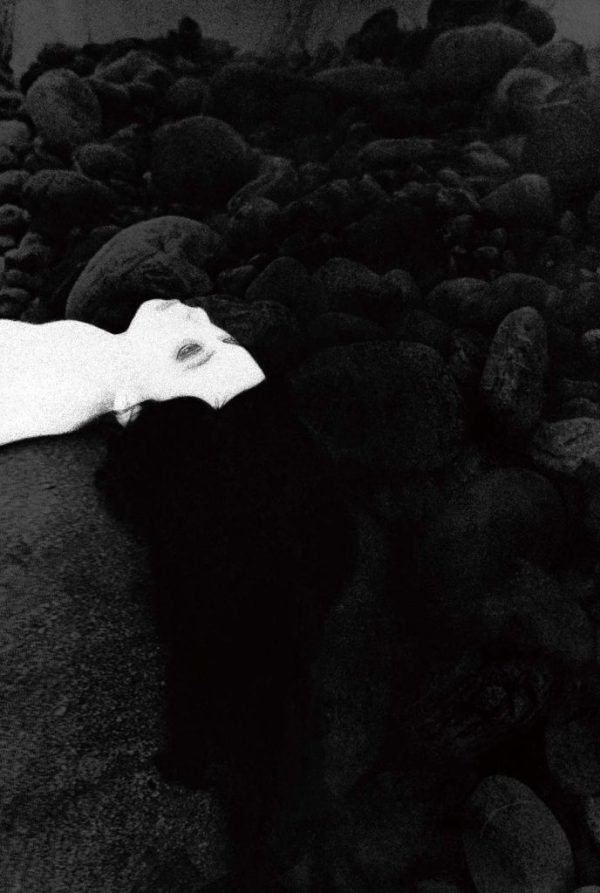
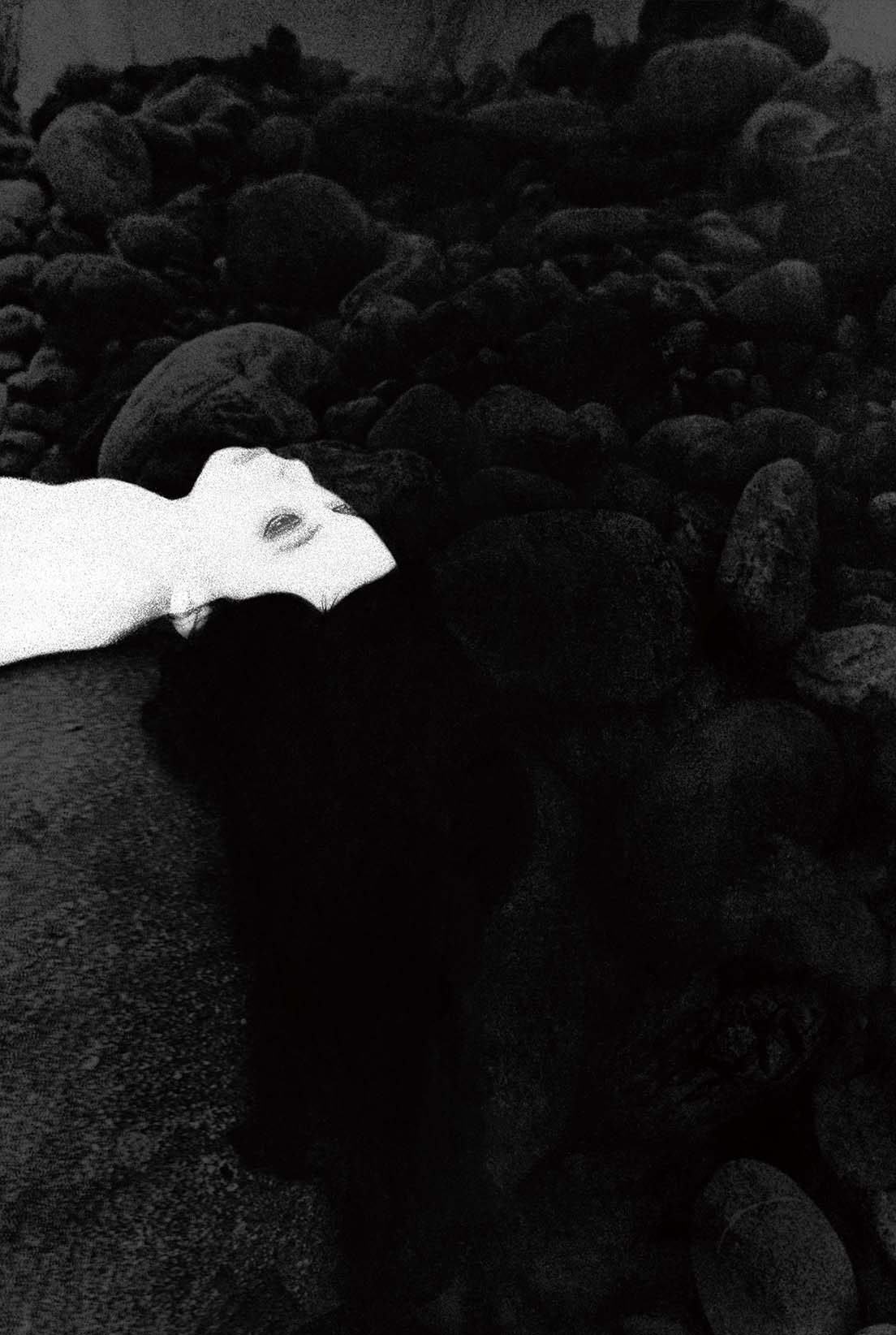
[ River Bed ] 1968
Bed 1968 is even more impressive in terms of the clash of materials. The chaos of stones is represented in such a way as to seem without limits, extending beyond the frame, in an all-over approach which creates a tellurian darkness in the image. At the top of one of the biggest rocks is a face extended by slender shoulders. Reminiscent of Mélisande’s fountain-like locks, the hair comes down to the lower edge of the image. The picture could be seen as a reverse version of Botticelli’s Birth of Venus. The whiteness of the epidermis, the frozen, gaping eyes, the neglected hair, without a trace of wind, all suggest death rather than birth, doubt about the endurance of the human rather than reborn confidence.
But the disquiet exuded by this image, with its admirable movement of lines and modulated greys comparable to the drawings and washes of ancient China, is counterbalanced by the formal boldness and, once again, the message. This image may trouble and frighten because of the ghostly appearance that has neither consistency nor volume. Nevertheless, it is the brightness of this face which engenders an undeniably hypnotic effect on the beholder.
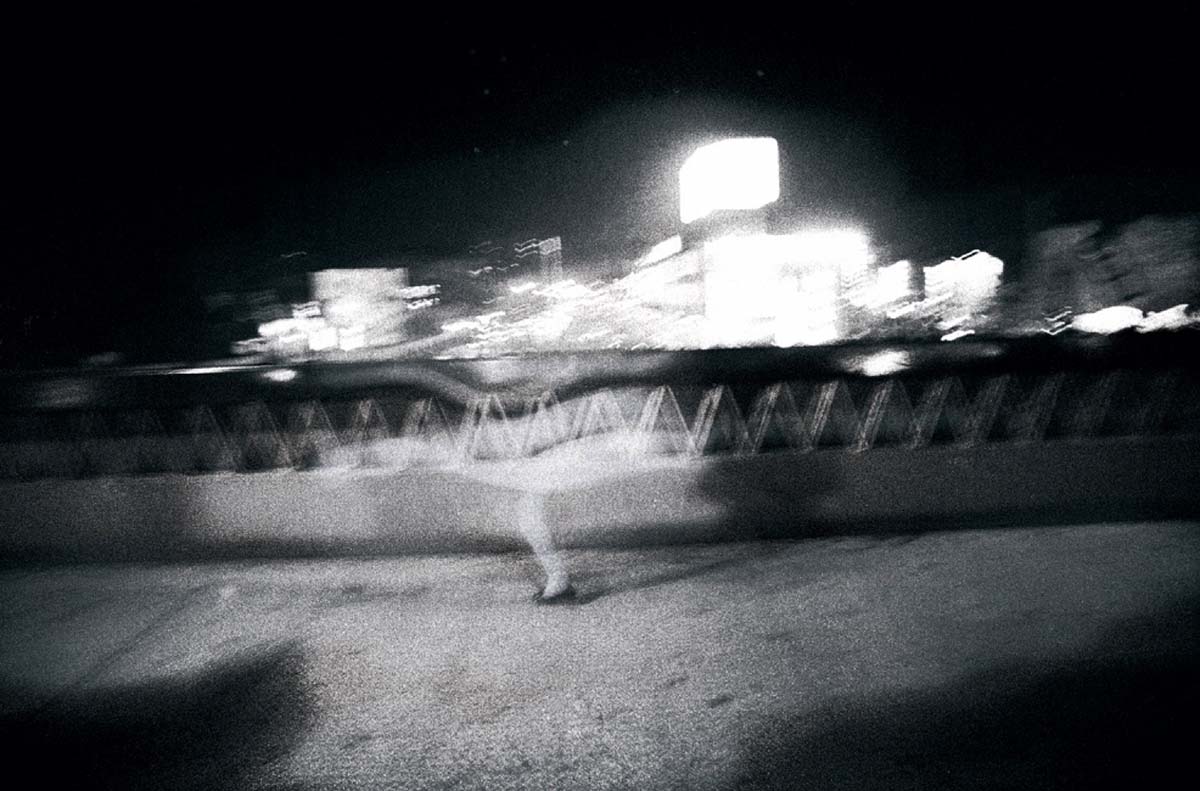
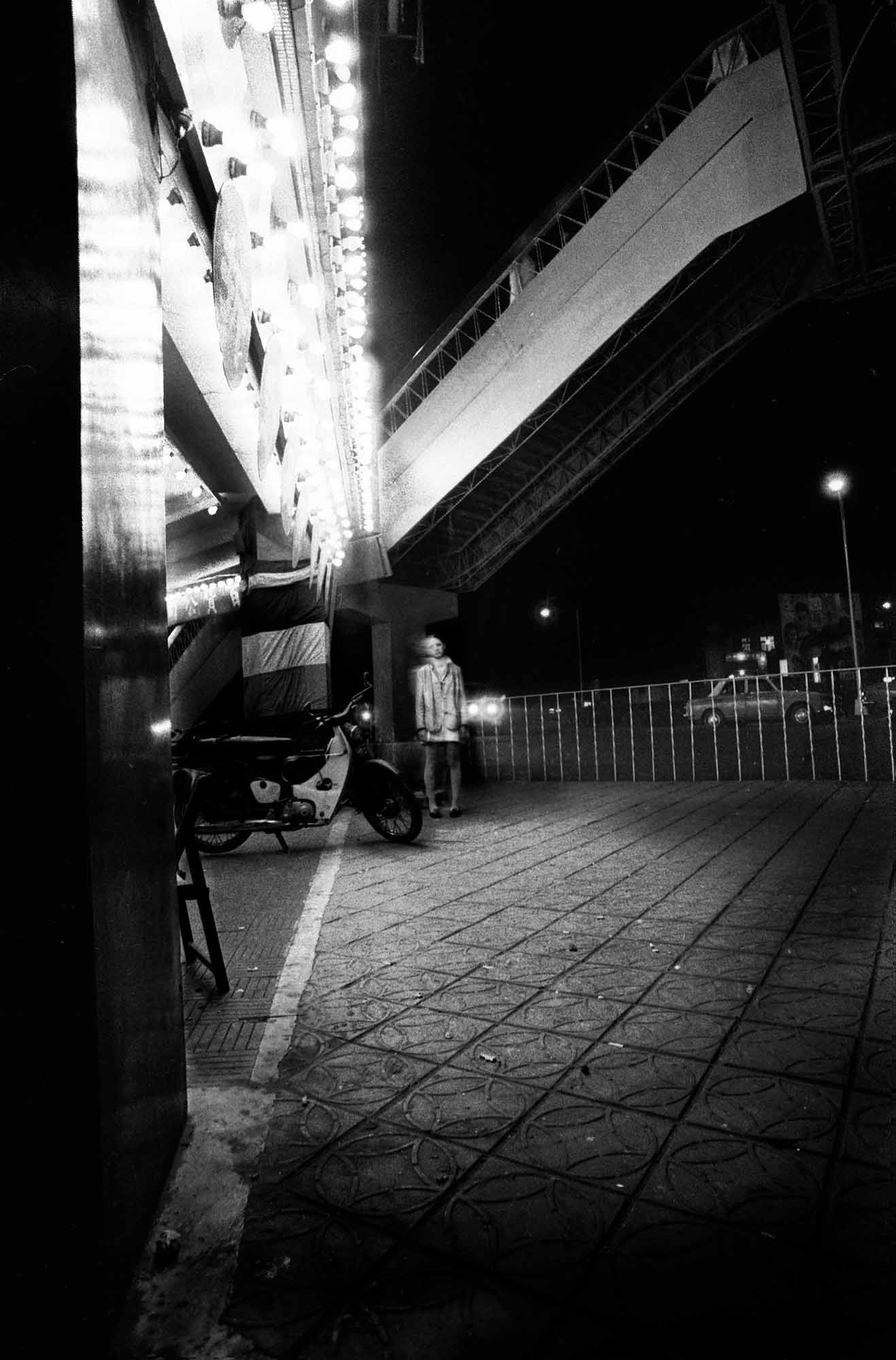
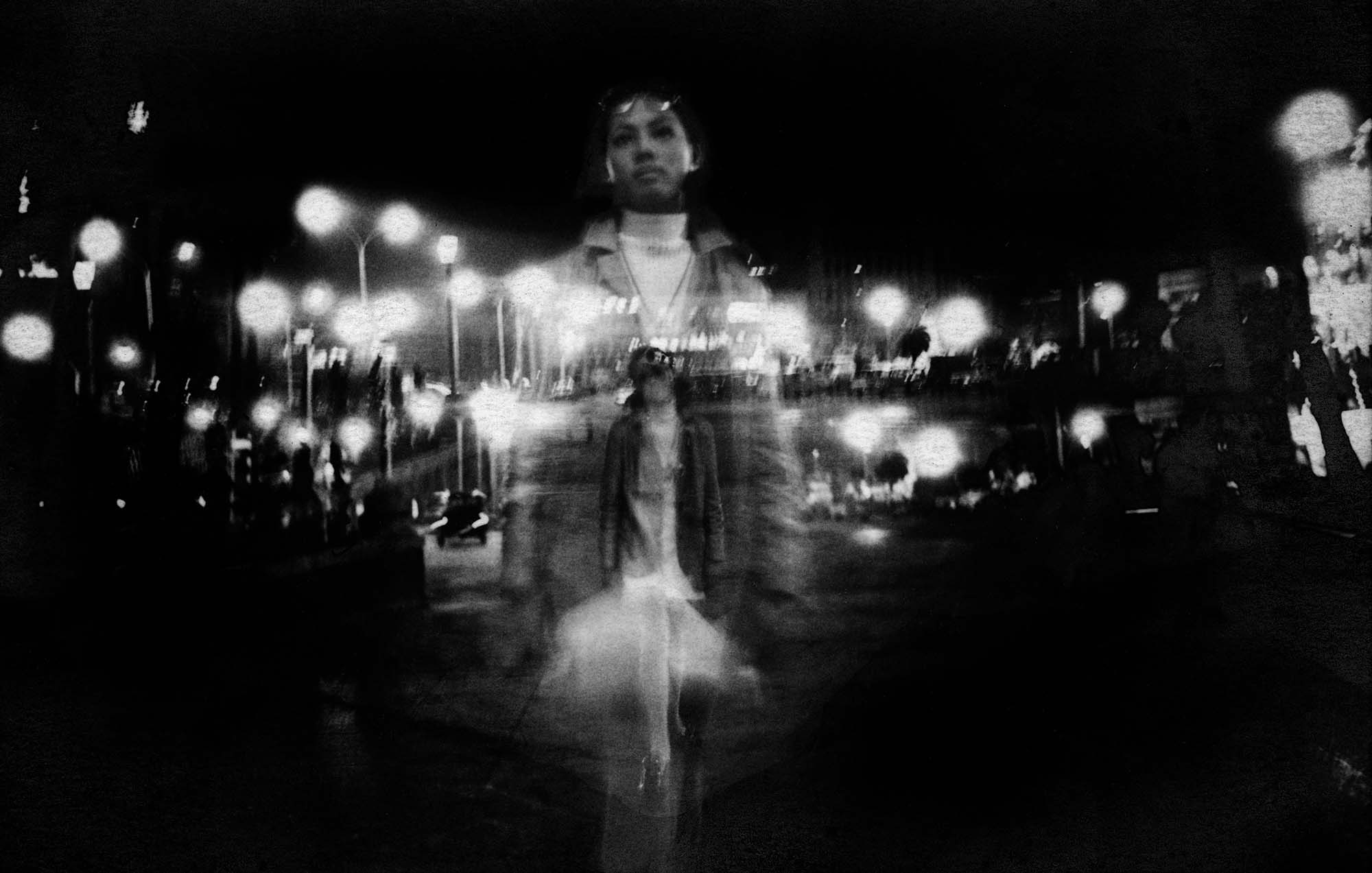
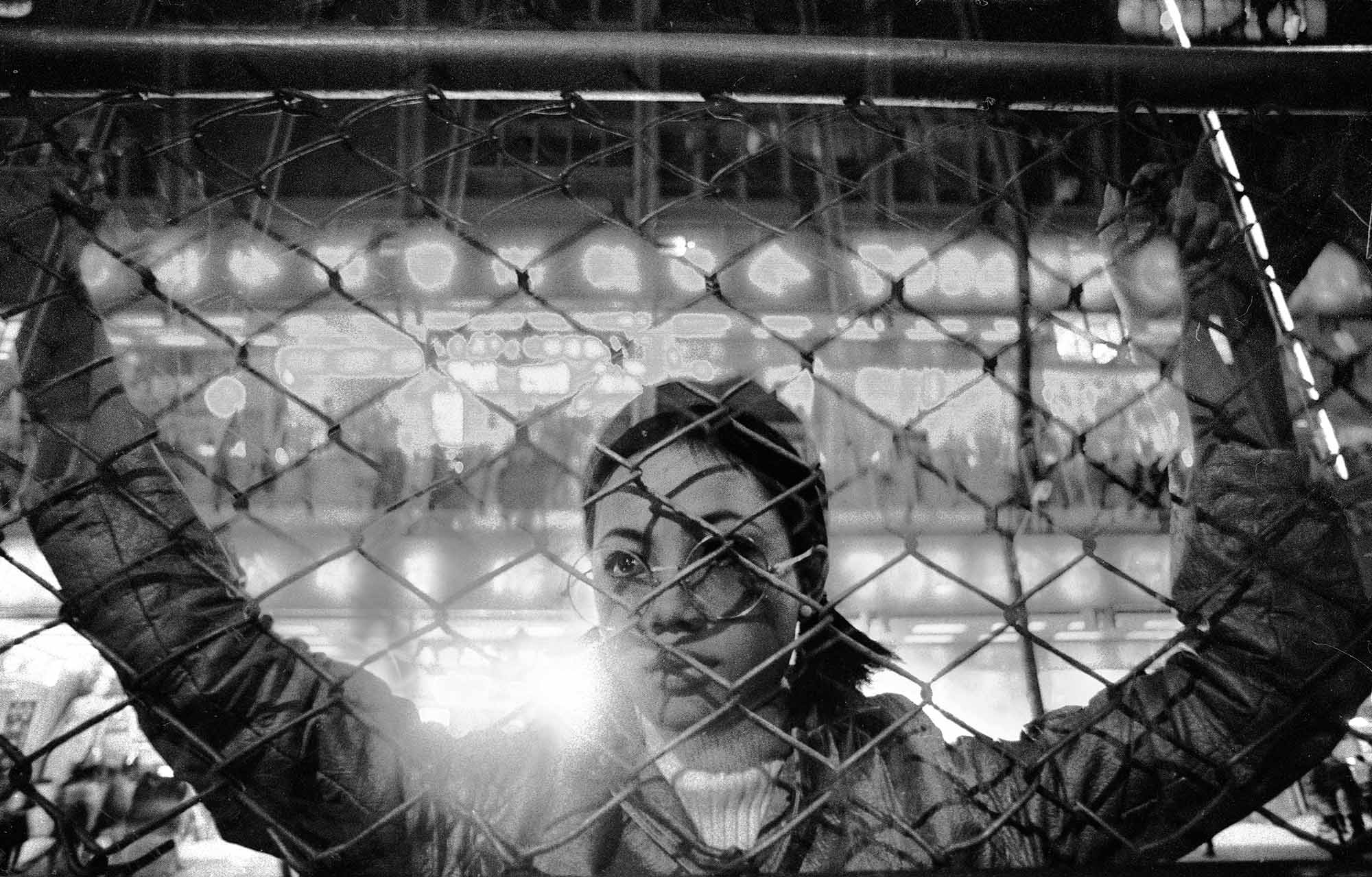
I have no hesitation in arguing that this work by Hsieh Chun-Te is one of his most disturbing icons, one that I would link and at the same time contrast with the incredible, absolutely antagonistic  [ Ximending ] 1969
Just as structured as the preceding images, structured in two parts separated by the zigzag of the parapet of a bridge, a female form melts into the movement of the light. The distant city, carried away in the narcissistic brightness of the lights of consumption, seems to threaten to swallow up this moving body in order to escape hell. It irresistibly reminds me of the Tenky series in which flaming nature threatens an Eve who has been expelled from a scrubby, stony paradise. It is likely that the artist’s return to what could be considered “youthful works” has revealed or even confirmed that his whole body of work is marked by the fundamental threat of the destruction of life by combustion. And the use of colour in the recent works has not diminished the apocalyptic torment of an artist from whom the disasters of progress and indifference to the natural fate of the world are to a large extent what drives his passion in composing images. Might we posit that colour serves this incendiary terror even more effectively?
To conclude this look back over works that are nearly half a century old, I would like to emphasise the remarkable constancy of Hsieh’s method. Well before artist’s photography became dominant on museum and gallery walls, I note with great surprise that Hsieh was already conceiving of the photographic act as essentially an act of staging.
But then, should we really consider this work as belonging to the trend of artist’s photography? No doubt we need to find another term than the French photographie plasticienne, one that, in avoiding reference to the tableau vivant, would designate an undertaking somewhere between photography and cinema. It is not a matter of comparing results. Hsieh’s large-scale photographic compositions make no attempt to hide their immobile performance and their dynamic disquiet. They are far from the world of cinema. However, a few images might bring back memories of the films of Nagisa Oshima, for example, or, to take a less “classical” filmmaker, Fruit Chan.
The point here is similarity of mise-en-scène. Each of Hsieh’s photographs – and this is a method that he began to apply as early as the 1960s – is the final step in a slow process and a long preparation that comprises finding locations, rehearsing with the “actors,” making anticipatory sketches, designing special costumes and many other preparatory actions that will obtain what one could think of as a film condensed into a single photograph, or the equivalent of a single frame – but with nothing before or after. What distinguishes Hsieh’s highly constructed images from the images of other contemporary artists is the multiplicity of visual approaches within each image. These destabilise the representation and express the complexity of its making. I am referring here, among many other aspects, to the oppositions in the textures of the image.
Looking back today, I can think of only one artist working in the medium of photography who combines documentary ambition with poetic lyricism: Jeff Wall. Notwithstanding the considerable distance between them, a distance that is more than just the geographical distance between Vancouver and Taipei, these two artists accord an importance to their photographic staging proportionate to the weight of contemporary issues, and do so at a time when nothing is easier than making images. But what images? Of course, many artists take time in their studio to painstakingly build up the compositions in their photos. But in most cases, sadly, the result is just a kitsch backdrop. No doubt, then, it is long before the shot can be taken that an artist like Hsieh, almost forgetting the decisive moment of shutter release, reflects on the world’s besetting ills.